
- Home
- |
- Our Culture
- Louis Riel
- Métis Firsts in North America
- Métis Minute
- Who are we?
- Métis Nation Database
- Kids' Corner
- I Love to Bead Month
- |
- Departments / Affiliates
- Citizenship
- Culture & Heritage
- Early Learning & Child Care
- Economic Development
- Education
- Energy, Infrastructure & Resource Management
- Engagement and Consultation
- Health & Wellness
- Housing and Property Management
- Identity Protection, Inter-Indigenous Relations & International Affairs
- Infinity Women Secretariat
- Louis Riel Capital Corporation
- Louis Riel College
- Louis Riel Institute
- MEDOCare Pharmacy
- Métis Child and Family Services Authority
- Métis Employment & Training
- Métis Justice Institute
- Métis Rights & Constitution
- Michif Language
- Red River Métis Business Development Corporation
- Red River Métis Community Resource
- Red River Métis Fur Company
- Red River Métis National Heritage Centre
- Red River Métis Veterans
- Riel House
- Sixties Scoop
- Youth
- |
- Government
- |
- Jobs
- |
- News
- |
- Contact
5 legendary women in Red River Métis history
March 11, 2024
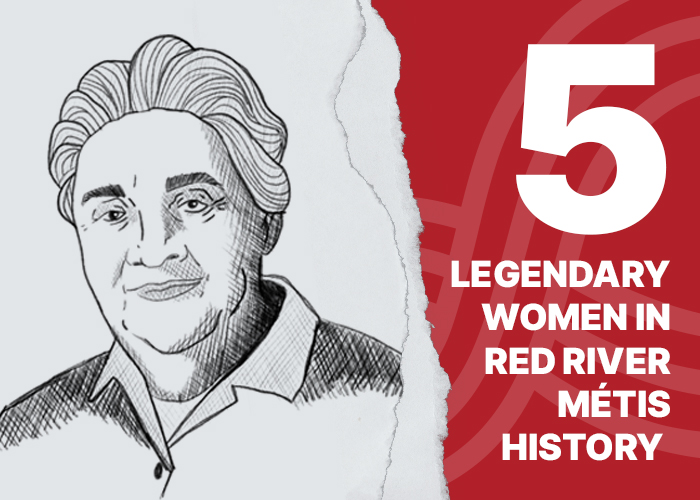
The Red River Métis are known both historically and presently as a matriarchal people. The role of Métis women has always been fundamental to the preservation of Red River Métis culture, history, and identity. It is our mothers who teach us and lead our families, and it is women who make up most of our leadership roles at the Local level, as well as the staff leadership of your Red River Métis Government. Of the 23 elected officials seated at the Manitoba Métis Federation (MMF) Cabinet table, 11 are women - so there is no question that Red River Metis women are leaders in our families, our Nation, and our government.
In honour of Women's History Month, the MMF celebrates the bold and courageous Matriarchs of yesterday who continue to inspire the women of today. Here are five women in Red River Métis history we will never forget.
- Mathilda Davis (1820-1873)
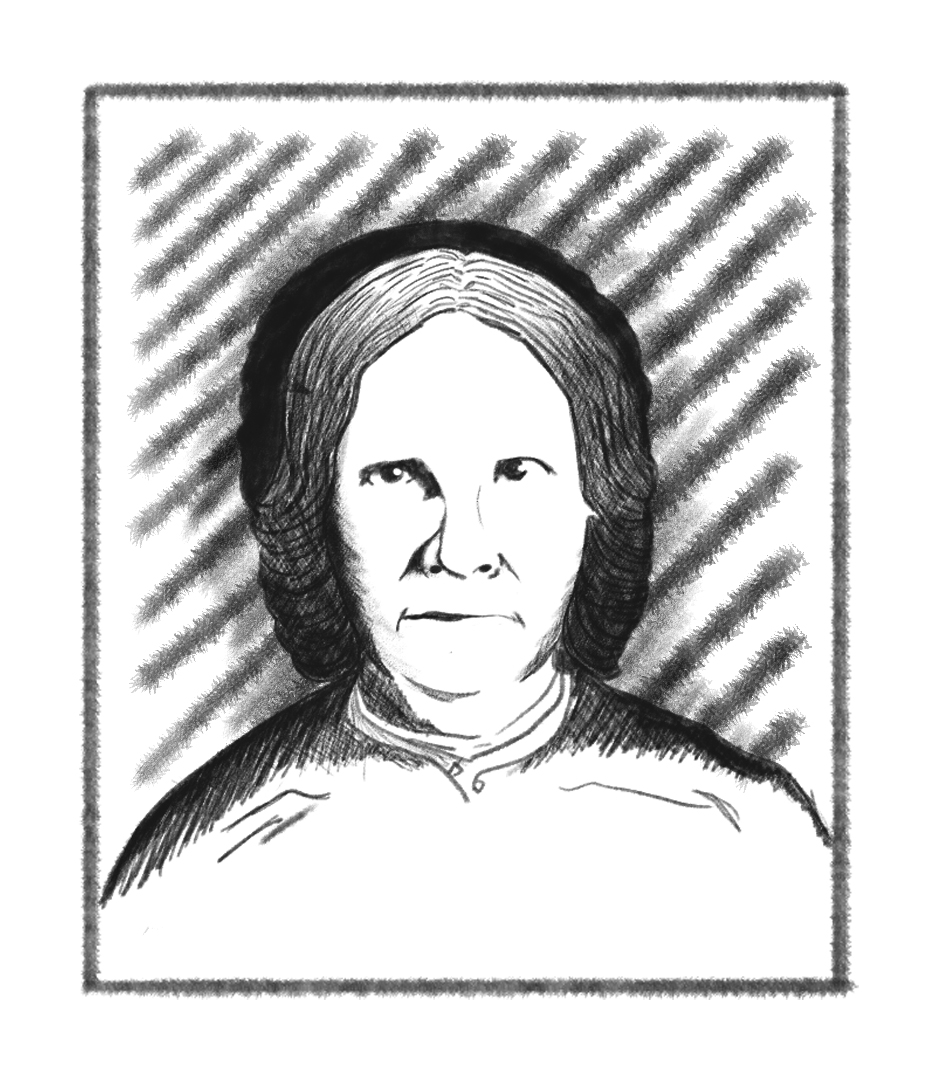
Mathilda Davis was born in the parish of St. Andrews, Red River Settlement, in 1820. Her father was John Davis, a retired officer of the Hudson's Bay Company (HBC). At the time, settlers and HBC families were obliged to send their daughters to England for their education. When Davis returned to Red River, she devoted her entire life to teaching.
During her time as an educator and with the help of influential Citizens, HBC families, and Dr. John Bunn, a physician for the HBC, a school for girls was established in the Red River in 1840. The school was first located in a frame house in St. Andrews, which was owned by Davis' brother, an HBC employee at Lower Fort Garry. In 1858, a stone house was built in front of the wooden one, which is still standing to this day. Several women prominent in the colony helped Davis in her teaching, including her sister Nancy.
Following Davis' death in 1873, education in the newly formed province of Manitoba was supported mainly by the church, but this Red River Métis educator will forever be remembered as a pioneer for women's education in the Red River.
- Annie Bannatyne (1830-1908)
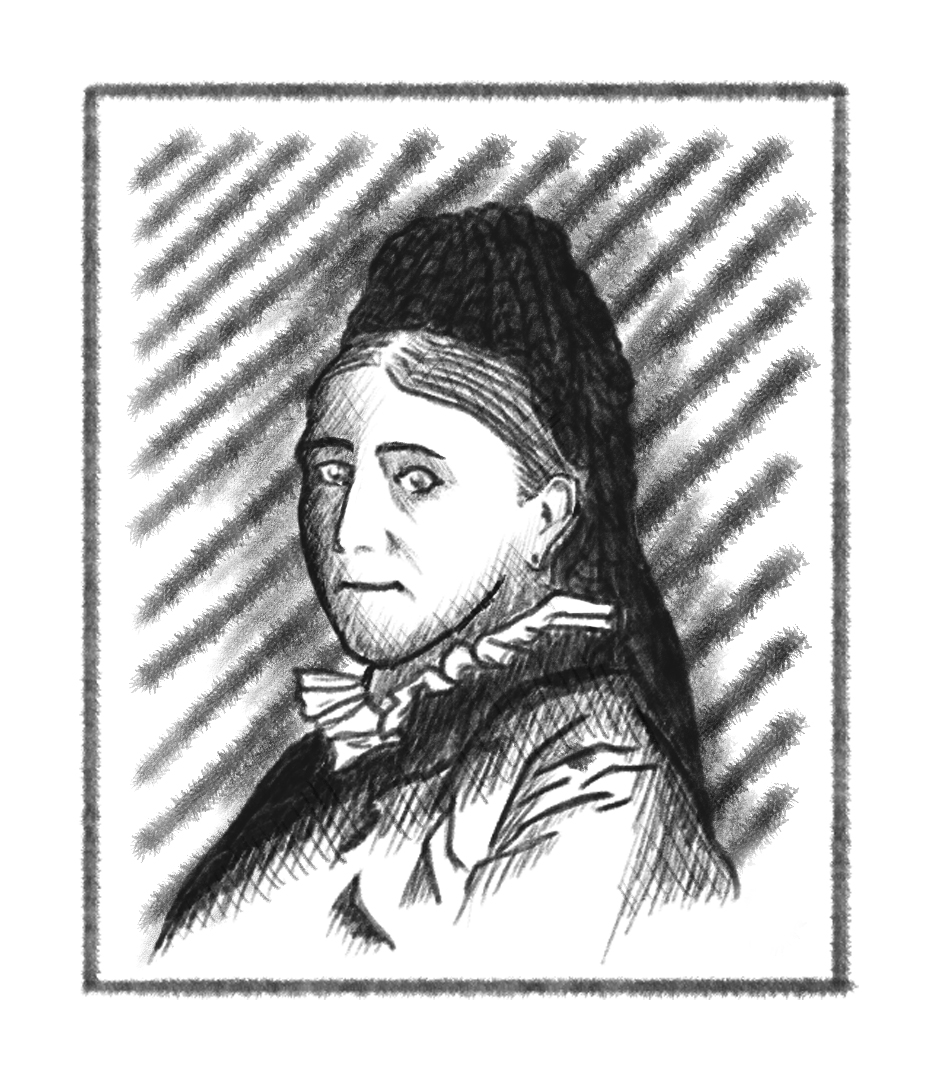
Annie Bannatyne was born at Fort Garry in 1830 to father Andrew McDermot and mother Sarah McNab. As one of the "First Ladies" of the Red River, she was known for being highly educated and for her early philanthropic work.
One of Bannatyne's biggest passions was her work with her Ladies' Association, a group of fellow philanthropic women who fundraised for a variety of causes. Her most notable work involved establishing the Winnipeg General Hospital (now the Health Sciences Centre), which was built on land donated by her husband, Andrew Graham Ballenden Bannatyne, as well as her father. The Ladies' Association later became known as the Women's Hospital Aid Society, which helped to raise money and donations of goods for many years.
In addition to her charitable works, she is most remembered in Red River Métis history for horse-whipping Englishman Charles Mair in February of 1869. Mair was an anti-Métis member of the Canada First Party and had written a letter which was published nationally making derogatory slurs about "half-breed women" and Red River society. After seeing this letter, Bannatyne vowed to seek revenge for the Red River Métis women he disrespected. What was a short-lived act of violence, with only a handful of lashes taking place, became known across the country as an act of resistance against the racism taking place against the Métis.
Bannatyne passed away in May 1908 and was laid to rest at the Kildonan Cemetery. Following her death, she was selected as a Manitoba 150 Women Trailblazer, a list released in 2021 by the Nellie McClung Foundation highlighting the exceptional women who made our province what it is today.
- Harriet Goldsmith Sinclair Cowan (1832-1926)
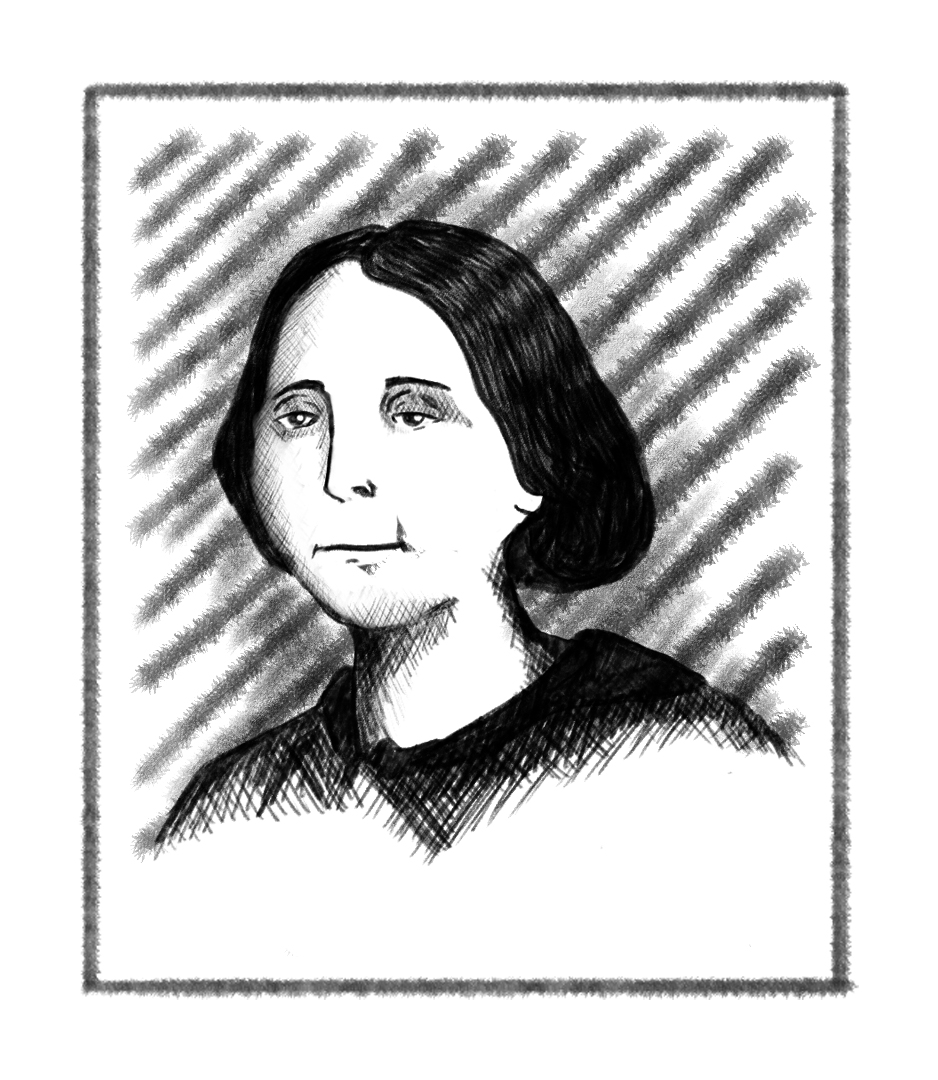
Harriet Goldsmith Sinclair Cowan was born at the Red River Settlement on July 9, 1832 the Métis daughter of trader James Sinclair and Elizabeth Maria Bird. Cowan was a highly educated girl, having done most of her schooling in the Red River before leaving with her sister for Galesburg, Illinois, to attend Knox College.
After returning from the U.S. in 1850, she married HBC physician William Cowan in 1852 and had four children. At that time, her family travelled all over the Red River for her husband's work as a surgeon, fur trader, and later second in command to Governor William McTavish. With such an eventful life, Cowan decided to contribute her recollections of early life in the Red River Settlement for the book Women of Red River by W.J. Healy.
To this day, she is known as one of the "First Ladies" of the Red River. With not many accounts of early life in the Red River from Métis women's perspectives, Cowan had the chance to provide insight into the important role of women during this time. She later passed away in September of 1926, in her home on Wardlaw Avenue from a broken hip.
- Marie Rose Delorme Smith (1861-1960)
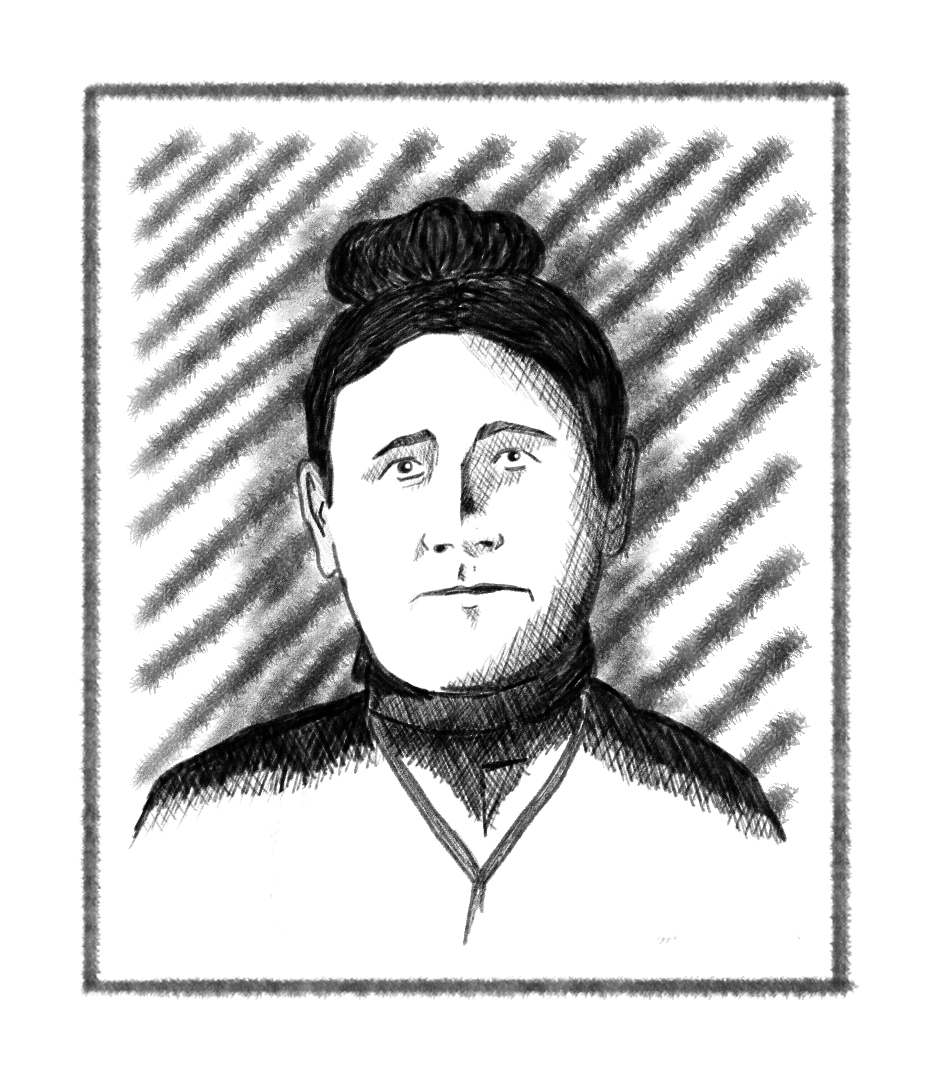
Marie Rose Delorme Smith was born in 1861 in Saint François-Xavier. In her early teens, she attended the Grey Nuns Boarding School in Saint Boniface where she learned to speak and write in both English and French, while remaining fluent in Cree and possibly in Michif. Her family spent their time travelling the western plains to hunt buffalo and trade.
Smith exemplified the leadership of Métis women through her work in community building and as a homesteader, rancher, and author. She witnessed firsthand the fur trade economy and culture of the Prairies shift to the more sedentary and increasingly agricultural economy. As an author, she was one of few who documented the roles of Métis women during the fur trade, the buffalo hunt, and homesteading periods, while also documenting the cultural changes she experienced on the prairie.
This homesteader was also one of the few women to own property at the time. Smith devoted her life to her husband and their 17 children while successfully running her family's ranch. She established a small cottage industry, as well as a boarding house and second homestead in a pioneer town, while showcasing her Métis cultural practices through her work as a midwife.
Unfortunately, she was unable to have her memoirs published in their entirety, but Smith did publish a series of articles in different news publications. Her later years were spent dedicated to her family. Smith passed away in 1960 at the age of 99.
- Elsie Bear (1921-2002)
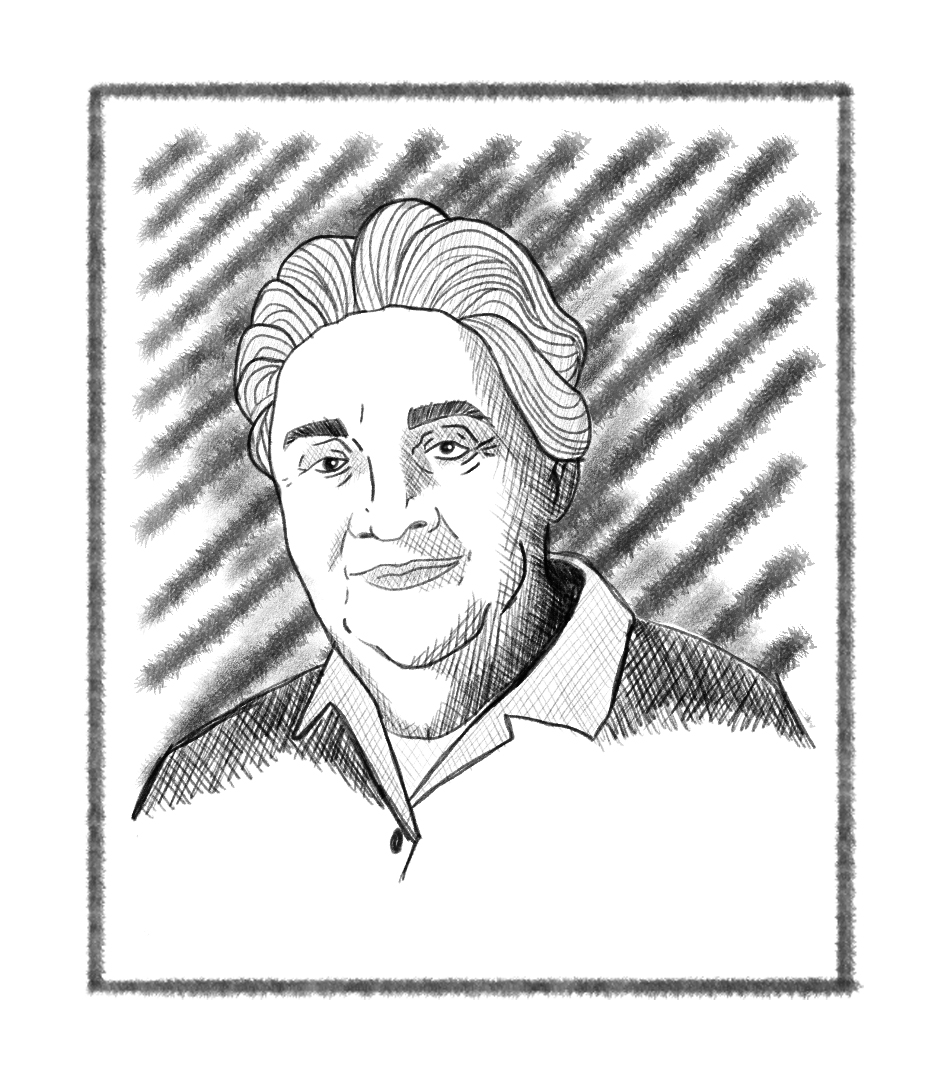
Elsie (Hourie) Bear was born in 1921 to a Métis family in Grand Marais. She attended school until Grade 8, then dropped out to find work after her father fell ill. At the age of 22, she met Sam Bear while working at a fishing camp on Lake Winnipeg. Within three months, the two were married. The couple had five children, two of which were adopted. The Bear home was always open to friends, family, loved ones, and anyone needing a place to stay.
Bear's hospitality and generosity extended further than anticipated, with the family opening their home to other families during Christmas. By 1972, their annual Christmas dinner moved to the Selkirk Friendship Centre where over 300 people were fed each year.
As a dedicated member of her community, Bear organized the Selkirk Friendship Centre in 1967, and was involved with the MMF from its inception that same year. She also assisted in the development of Friendship Centres across the country.
Bear received recognition for her philanthropic work over the course of her lifetime. She was named Woman of the Year in 1987 and placed on the Wall of Honour at the Winnipeg Indian and Métis Friendship Centre. That same year, she was made a Senator of the MMF, and in 1990 was selected by MMF Senators to work on the constitution. In 1992, she was honoured with the esteemed Order of the Buffalo Hunt for her community service. It was a well-deserved recognition of her dedication and hard work in helping others.
Before her death in 2002, Bear was given the honour of receiving the Order of the Shawl, an award given to those who lived their lives advocating for the rights of the Red River Métis. She was unable to receive her award before she passed, so the shawl was placed on her casket during her funeral. To honour her legacy, the restaurant in the MMF Home Office, located at 150 Henry Avenue, is named "Elsie Bear's Kitchen," an establishment that embodies her caregiving spirit.
Sources
Dictionary of Canadian Biography - DAVIS, MATHILDA - Volume X (1871-1880) - (n.d.). www.biographi.ca/en/bio/davis_mathilda_10E.html
Goldsborough, G. (n.d.-c). Memorable Manitobans: Matilda Davis (c1820-1873). Manitoba Historical Society. www.mhs.mb.ca/docs/people/davis_m.shtml
Staff, R. (2022, December 31). Memorable Metis: Matilda Davis. St. Andrews Rectory. www.standrewsrectory.ca/memorable-metis-matilda-davis
Goldsborough, G. (n.d.-a). Memorable Manitobans: Annie McDermot Bannatyne (c1830-1908). Manitoba Historical Society. https://mhs.mb.ca/docs/people/bannatyne_am.shtml
Nellie McClung Foundation. (n.d.). Anne Bannatyne. www.nelliemcclungfoundation.com/150-trailblazers/anne-bannatyne
Health Sciences Centre Foundation. Annie and Andrew Bannatyne. (2023, June 28). Health Sciences Centre Foundation. www.hscfoundation.mb.ca/stories/annie-and-andrew-bannatyne
Canadiana. (n.d.). Parish registers: Manitoba : H-1344 - Héritage. https://heritage.canadiana.ca/view/oocihm.lac_reel_h1344/3548
W.J Healy. (1923). Women of Red River : Being a book written from the recollections of women surviving from the Red River era. www.mhs.mb.ca/docs/books/womenofredriver.pdf
Goldsborough, G. (n.d.). Memorable Manitobans: Harriette Sinclair Cowan (1832-1926). Manitoba Historical Society. www.mhs.mb.ca/docs/people/cowan_hgs.shtml
Barkwell, L. Louis Riel Institute. (n.d.). Harriette Goldsmith Sinclair Cowan (1832-1926). www.metismuseum.ca/media/document.php/149063.Harriette%20Goldsmith%20Sinclair%20Cowan.pdf.
Parks Canada Agency. (2023). Marie Rose (Delorme) Smith National Historic Person (1861-1960). Government of Canada. https://parks.canada.ca/culture/designation/personnage-person/marie-rose-delorme
Canadian Council of Herbalist Association (CCHA). Marie Rose Delorme Smith, Metis herbalist & midwife - Alberta (1862-1960) - CCHA / CCAH. (2021). https://herbalccha.org/council-of-elders/marie-rose-delorme-smith-metis-herbalist-midwife-alberta-1862-1960
University of Calgary. Smith, Marie Rose - Archives. (n.d.). https://searcharchives.ucalgary.ca/smith-marie-rose
Goldsborough, G. (n.d.-b). Memorable Manitobans: Elsie Bear (1921-2002). Manitoba Historical Society. https://mhs.mb.ca/docs/people/bear_e.shtml
Gabriel Dumont Institute. (2009). Bear, Elsie. Virtual Museum of Metis History and Culture. www.metismuseum.ca/resource.php/10292
City of Selkirk. (n.d.). Elsie Bear. Selkirk Museum. https://selkirkmuseum.ca/people/elsie-bear
Cinq femmes légendaires de l'histoire des Métis de la rivière Rouge
Les femmes métisses de la rivière Rouge continuent aujourd'hui encore à façonner notre identité en tant que peuple.
Les Métis de la rivière Rouge sont connus, historiquement et de nos jours, comme un peuple matriarcal. Les femmes métisses ont toujours été au cœur de la préservation de la culture, de l'histoire et de l'identité des Métis de la rivière Rouge. Ce sont nos mères qui nous éduquent et dirigent nos familles, et ce sont les femmes qui jouent un rôle prépondérant dans nos sections locales, en plus d'occuper les postes de direction du personnel de votre gouvernement métis de la rivière Rouge. Sur les 23 élu(e)s siégeant à la table du cabinet de la Fédération Métisse du Manitoba (FMM), onze sont des femmes. Il ne fait donc aucun doute que les femmes métisses de la rivière Rouge sont des leaders dans nos familles, dans notre Nation et dans notre gouvernement.
En l'honneur du Mois de l'histoire des femmes, la FMM rend hommage aux audacieuses et courageuses matriarches d'hier qui continuent d'inspirer les femmes d'aujourd'hui. Voici cinq femmes de l'histoire des Métis de la rivière Rouge que nous n'oublierons jamais.
- Mathilda Davis (1820-1873)
Mathilda Davis est née dans la paroisse St. Andrews, dans la colonie de la Rivière-rouge, en 1820 . Son père était John Davis, un officier retraité de la Compagnie de la Baie d'Hudson (lien en anglais seulement). À l'époque, les colons et les familles de la Compagnie devaient envoyer leurs filles en Angleterre pour leur éducation. Quand elle est rentrée à la colonie de la Rivière-rouge, Mathilda Davis a consacré sa vie entière à l'enseignement.
Pendant ses années d'enseignement et avec l'aide de citoyennes et citoyens influents, de familles de la Compagnie de la Baie d'Hudson et du Dr John Bunn, médecin de la Compagnie, une école pour filles a été créée à la Rivière-Rouge en 1840 (lien en anglais seulement). L'école a d'abord été installée dans une maison en bois à St. Andrews qui appartenait au frère de Mathilda Davis, employé de la Compagnie à Lower Fort Garry. En 1858, une maison en pierre, qui existe encore aujourd'hui, a été construite en face de la maison en bois. Plusieurs femmes influentes de la colonie, dont sa sœur Nancy, ont aidé Davis dans son enseignement.
Après la mort de Mathilda Davis en 1873, l'éducation dans la nouvelle province du Manitoba a été principalement soutenue par l'Église, mais cette éducatrice métisse de la rivière Rouge restera à jamais dans les mémoires comme une pionnière de l'éducation des femmes dans la région de la rivière Rouge.
- Anne Bannatyne (1830-1908)
Née à Fort Garry en 1830, Anne Bannatyne était la fille d'Andrew McDermot et de Sarah McNab. Au nombre des « premières dames » de la rivière Rouge, elle était connue pour son haut niveau d'éducation et pour son engagement philanthropique(lien en anglais seulement).
L'une des plus grandes passions de Bannatyne était son travail au sein de sa Ladies' Association, un groupe de femmes philanthropes qui collectaient des fonds pour différentes causes. Son apport le plus remarquable a été la création de l'Hôpital général de Winnipeg (aujourd'hui le Centre des sciences de la santé - lien en anglais seulement) construit sur un terrain donné par son époux, Andrew Graham Ballenden Bannatyne, ainsi que par son père. La Ladies' Association est devenue plus tard la Women's Hospital Aid Society, qui a aidé à collecter des fonds et des dons de marchandises pendant de nombreuses années.
Outre ses œuvres de bienfaisance, l'histoire des Métis de la rivière Rouge se souvient surtout d'elle pour avoir cravaché un Anglais du nom de Charles Mair en février 1869. Mair était un membre du parti Canada First qui se distinguait par sa haine des Métis, et il avait rédigé une lettre, publiée dans tout le pays, dans laquelle il proférait des injures envers les femmes de « sang-mêlé » et la société de la rivière Rouge. Après avoir lu cette lettre, Bannatyne s'était juré de venger les femmes métisses de la rivière Rouge auxquelles il avait manqué de respect. Cet acte furtif de violence, où quelques coups de fouet seulement furent donnés, a été reconnu dans tout le pays comme un acte de résistance contre le racisme dont les Métis étaient la cible.
Bannatyne est décédée en mai 1908 et repose au cimetière de Kildonan. Après sa mort, elle a été choisie comme l'une des 150 femmes pionnières du Manitoba, une liste publiée en 2021 par la Fondation Nellie McClung qui met en lumière les femmes exceptionnelles qui ont fait de notre province ce qu'elle est aujourd'hui.
- Harriet Goldsmith Sinclair Cowan (1832-1926)
Harriet Goldsmith Sinclair Cowan (lien en anglais seulement) est née dans la colonie de la Rivière-rouge le 9 juillet 1832 . Elle était la fille métisse du négociant James Sinclair (lien en anglais seulement) et d'Elizabeth Maria Bird . Cowan était une jeune fille très instruite, ayant fait la plus grande partie de sa scolarité dans la colonie de la Rivière-rouge avant de partir avec sa sœur pour Galesburg, en Illinois, afin d'étudier au Knox College.
Après être rentrée des États-Unis en 1850, elle a épousé un médecin de la Compagnie de la Baie d'Hudson, William Cowan (document en anglais seulement), en 1852. Le couple a eu quatre enfants. À cette époque, sa famille sillonnait la région de la rivière Rouge pour le travail de son époux qui œuvrait comme chirurgien, commerçant de fourrures et, plus tard, commandant en second du gouverneur William McTavish. Avec une existence aussi mouvementée, Cowan a décidé de raconter ses souvenirs de la vie dans la colonie de la Rivière-rouge pour le livre Women of Red River de W.J. Healy (document en anglais seulement).
Aujourd'hui encore, elle est reconnue comme l'une des « premières dames » de la rivière Rouge. Comme il n'y a pas beaucoup de récits sur les débuts de la colonie de la Rivière-rouge du point de vue des femmes métisses, Cowan a eu la chance de donner un aperçu du rôle important que jouaient les femmes à cette époque. Elle est décédée en septembre 1926, dans sa maison de l'avenue Wardlaw, des suites d'une fracture de la hanche.
- Marie Rose Delorme Smith (1861-1960)
Marie Rose Delorme Smith est née en 1861 à Saint François-Xavier. Au début de son adolescence, elle a fréquenté le pensionnat des Sœurs Grises de Saint-Boniface, où elle a appris à parler et à écrire en anglais et en français, tout en parlant couramment le cri et probablement le michif. Sa famille passait son temps à parcourir les plaines de l'Ouest pour chasser le bison et faire du commerce.
Smith illustre le leadership des femmes métisses par son travail de bâtisseuse communautaire, de défricheuse (homesteader), d'éleveuse (lien en anglais seulement) et d'écrivaine. Elle a été aux premières loges pour assister à la transformation de l'économie et de la culture des Prairies, basée sur le commerce de la fourrure, en une économie plus sédentaire et de plus en plus agricole. En tant qu'autrice, elle est l'une des rares à avoir documenté le rôle des femmes métisses pendant la traite des fourrures, la chasse au bison et les périodes de colonisation, tout en documentant les changements culturels qu'elle a vécus dans les Prairies (lien en anglais seulement).
Cette pionnière était également l'une des rares femmes à posséder une propriété à l'époque. Smith a consacré sa vie à son époux et à leurs dix-sept enfants, tout en gérant avec succès le ranch familial. Elle a créé une petite industrie artisanale, ainsi qu'une pension de famille et un second lot de colonisation (homestead) dans une ville de pionniers, tout en mettant en valeur ses pratiques culturelles métisses grâce à son travail de sage-femme.
Malheureusement, elle n'a pas pu faire publier l'intégralité de ses mémoires, mais elle a publié une série d'articles dans différents périodiques. Elle a consacré les dernières années de sa vie à sa famille. Elle est décédée en 1960, à l'âge de 99 ans.
- Elsie Bear (1921-2002)
Elsie (Hourie) Bear (lien en anglais seulement) est née en 1921 au sein d'une famille métisse à Grand Marais(lien en anglais seulement). Elle a fréquenté l'école jusqu'en huitième année, puis elle a dû abandonner pour trouver du travail après que son père soit tombé malade. À 22 ans, elle a rencontré Sam Bear alors qu'elle travaillait dans un camp de pêche sur le lac Winnipeg. Ils se sont mariés trois mois plus tard. Le couple a eu cinq enfants, dont deux adoptés. La maison des Bear était toujours ouverte aux amis, à la famille, aux proches et à quiconque avait besoin d'un endroit où séjourner.
L'hospitalité et la générosité des Bear s'est étendue plus que prévu, alors que la famille a ouvert sa maison à d'autres familles à l'occasion de Noël. En 1972, leur dîner de Noël annuel a été transféré au Selkirk Friendship Centre (centre d'amitié de Selkirk), où plus de 300 personnes étaient nourries chaque année (lien en anglais seulement).
Membre dévouée de sa communauté, Bear a organisé le Selkirk Friendship Centre en 1967 et s'est engagée dans la FMM dès sa création la même année. Elle a également contribué à la création de centres d'amitié dans tout le pays.
Bear a été reconnue de son vivant pour son engagement philanthropique. En 1987, elle a été nommée « femme de l'année » et inscrite sur le mur d'honneur du Winnipeg Indian and Métis Friendship Centre (aujourd'hui le Winnipeg Indigenous Friendship Centre - « centre d'amitié autochtone de Winnipeg »). La même année, elle a été nommée sénatrice de la FMM et, en 1990, elle a été choisie par le sénat de la FMM pour œuvrer à la rédaction de la constitution. En 1992, elle a reçu le prestigieux Ordre de la chasse au bison pour ses services rendus à la communauté. Il s'agissait d'une reconnaissance bien méritée de son dévouement et de son travail acharné pour aider ses semblables.
Avant sa mort en 2002, Bear a eu l'honneur de recevoir l'Ordre de la ceinture fléchée, un prix décerné à des personnes qui ont passé leur vie à défendre les droits des Métis de la rivière Rouge. Comme elle n'a pas pu recevoir cette distinction avant son décès, la ceinture fléchée a été placée sur son cercueil lors de ses funérailles[GT23] . Pour honorer son héritage, le restaurant du siège social de la FMM, situé au 150 de l'avenue Henry, a été baptisé « Elsie Bear's Kitchen », un établissement qui incarne l'esprit d'entraide qui l'animait.
Sources
Dictionnaire biographique du Canada - DAVIS, MATHILDA - Volume X (1871-1880) - (sans indication de date). www.biographi.ca/fr/bio/davis_mathilda_10F.html
Goldsborough, G. (n.d.-c). Memorable Manitobans: Matilda Davis (c1820-1873). Manitoba Historical Society. www.mhs.mb.ca/docs/people/davis_m.shtml (lien en anglais seulement)
Staff, R. (2022, December 31). Memorable Metis: Matilda Davis. St. Andrews Rectory. www.standrewsrectory.ca/memorable-metis-matilda-davis/ (lien en anglais seulement)
Goldsborough, G. (n.d.-a). Memorable Manitobans: Annie McDermot Bannatyne (c1830-1908). Manitoba Historical Society. https://mhs.mb.ca/docs/people/bannatyne_am.shtml (lien en anglais seulement)
Fondation Nellie McClung (sans indication de date). Anne Bannatyne. www.nelliemcclungfoundation.com/150-trailblazers/anne-bannatyne
Health Sciences Centre Foundation (« fondation du Centre des sciences de la santé »). Annie and Andrew Bannatyne. (2023, June 28). Health Sciences Centre Foundation. www.hscfoundation.mb.ca/stories/annie-and-andrew-bannatyne (lien en anglais seulement)
Canadiana (sans indication de date). Parish registers: Manitoba : H-1344 - Héritage. https://heritage.canadiana.ca/view/oocihm.lac_reel_h1344/3548 (document en anglais seulement)
W.J Healy. (1923). Women of Red River: Being a book written from the recollections of women surviving from the Red River era. www.mhs.mb.ca/docs/books/womenofredriver.pdf (document en anglais seulement)
Goldsborough, G. (n.d.). Memorable Manitobans: Harriette Sinclair Cowan (1832-1926). Manitoba Historical Society. www.mhs.mb.ca/docs/people/cowan_hgs.shtml (lien en anglais seulement)
Barkwell, L. Louis Riel Institute. (n.d.). Harriette Goldsmith Sinclair Cowan (1832-1926). www.metismuseum.ca/media/document.php/149063.Harriette%20Goldsmith%20Sinclair%20Cowan.pdf (document en anglais seulement)
Agence Parcs Canada (2023). Personnage historique national de Marie Rose (Delorme) Smith (1861-1960). Gouvernement du Canada. https://parcs.canada.ca/culture/designation/personnage-person/marie-rose-delorme
Canadian Council of Herbalist Association (CCHA). Marie Rose Delorme Smith, Metis herbalist & midwife - Alberta (1862-1960) - CCHA / CCAH. (2021). https://herbalccha.org/council-of-elders/marie-rose-delorme-smith-metis-herbalist-midwife-alberta-1862-1960 (lien en anglais seulement)
University of Calgary. Smith, Marie Rose - Archives. (n.d.). https://searcharchives.ucalgary.ca/smith-marie-rose (lien en anglais seulement)
Goldsborough, G. (n.d.-b). Memorable Manitobans: Elsie Bear (1921-2002). Manitoba Historical Society. https://mhs.mb.ca/docs/people/bear_e.shtml (lien en anglais seulement)
Gabriel Dumont Institute. (2009). Bear, Elsie. Virtual Museum of Metis History and Culture. www.metismuseum.ca/resource.php/10292 (lien en anglais seulement)
City of Selkirk. (n.d.). Elsie Bear. Selkirk Museum. https://selkirkmuseum.ca/people/elsie-bear (lien en anglais seulement)

Contact Us
300-150 Henry Avenue
Winnipeg, Manitoba, Canada, R3B 0J7
x 204-586-8474 A info [at] mmf [dot] mb [dot] ca
