
- Home
- |
- Our Culture
- Louis Riel
- Métis Firsts in North America
- Métis Minute
- Who are we?
- Métis Nation Database
- Kids' Corner
- I Love to Bead Month
- |
- Departments / Affiliates
- Citizenship
- Culture & Heritage
- Early Learning & Child Care
- Economic Development
- Education
- Energy, Infrastructure & Resource Management
- Engagement and Consultation
- Health & Wellness
- Housing and Property Management
- Identity Protection, Inter-Indigenous Relations & International Affairs
- Infinity Women Secretariat
- Louis Riel Capital Corporation
- Louis Riel College
- Louis Riel Institute
- MEDOCare Pharmacy
- Métis Child and Family Services Authority
- Métis Employment & Training
- Métis Justice Institute
- Métis Rights & Constitution
- Michif Language
- Red River Métis Business Development Corporation
- Red River Métis Community Resource
- Red River Métis Fur Company
- Red River Métis National Heritage Centre
- Red River Métis Veterans
- Riel House
- Sixties Scoop
- Youth
- |
- Government
- |
- Jobs
- |
- News
- |
- Contact
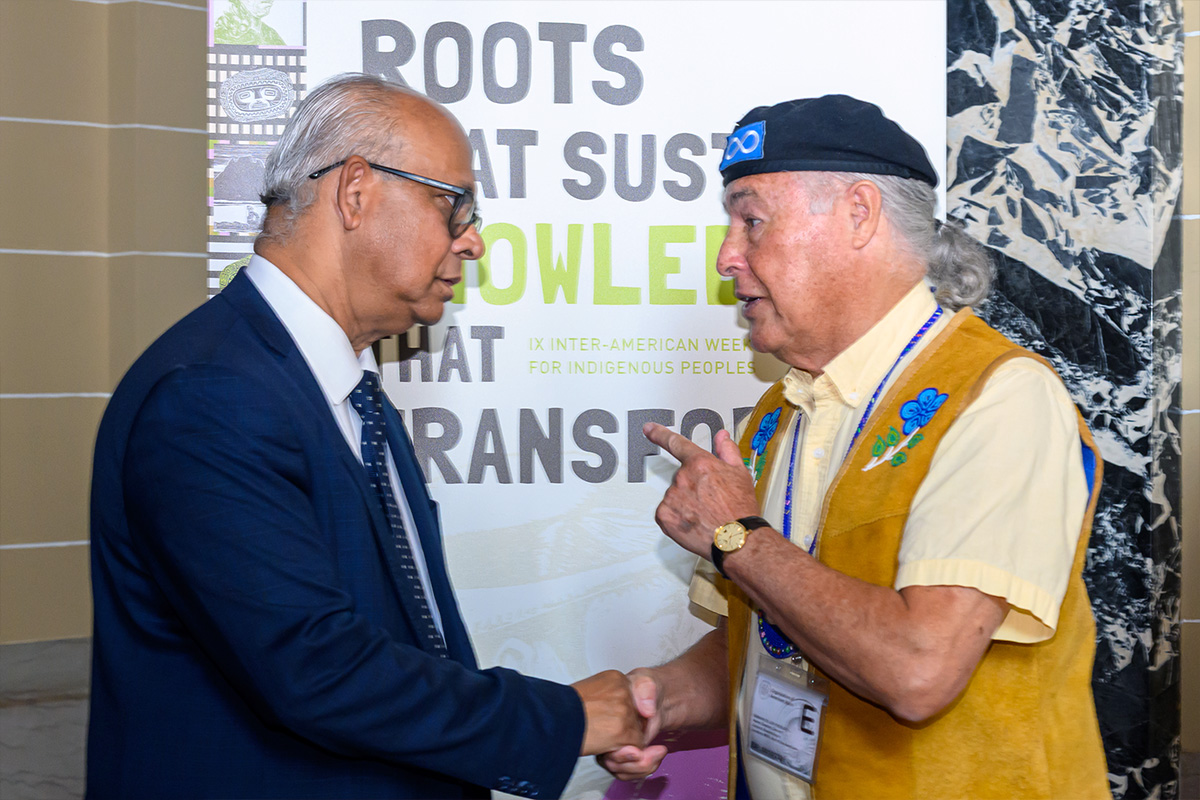
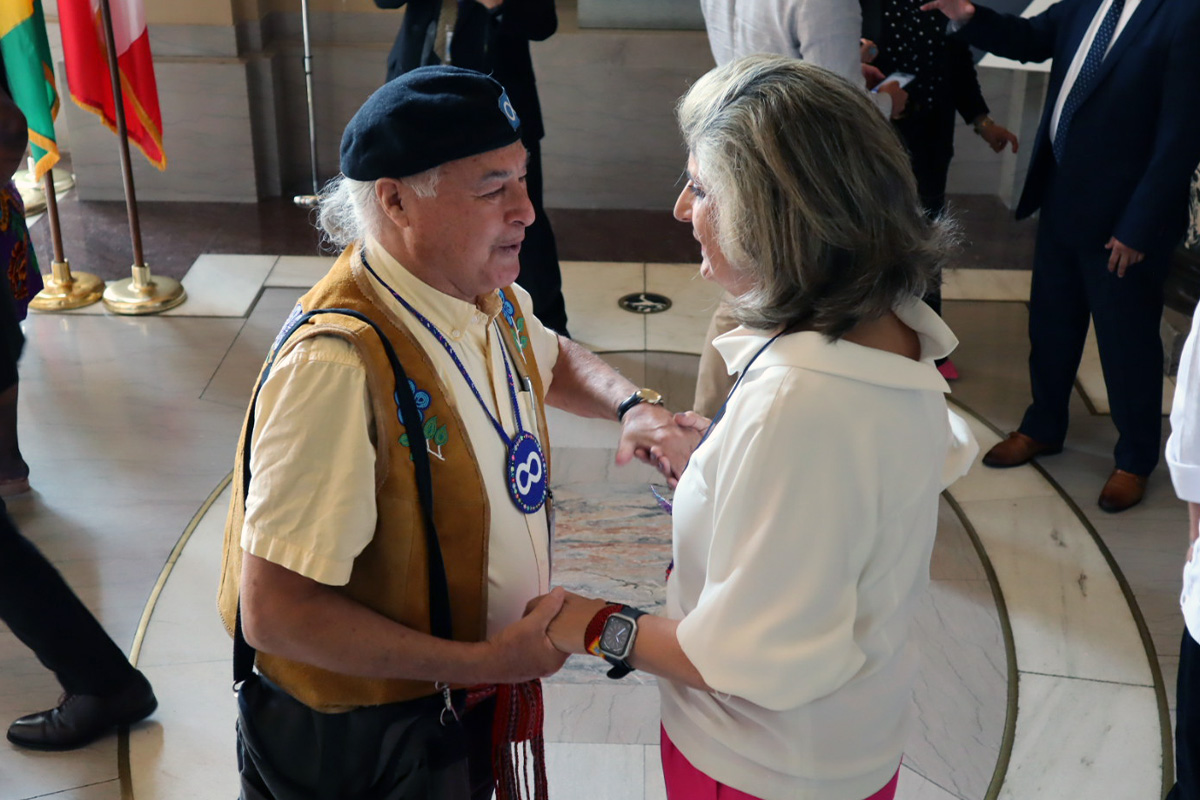
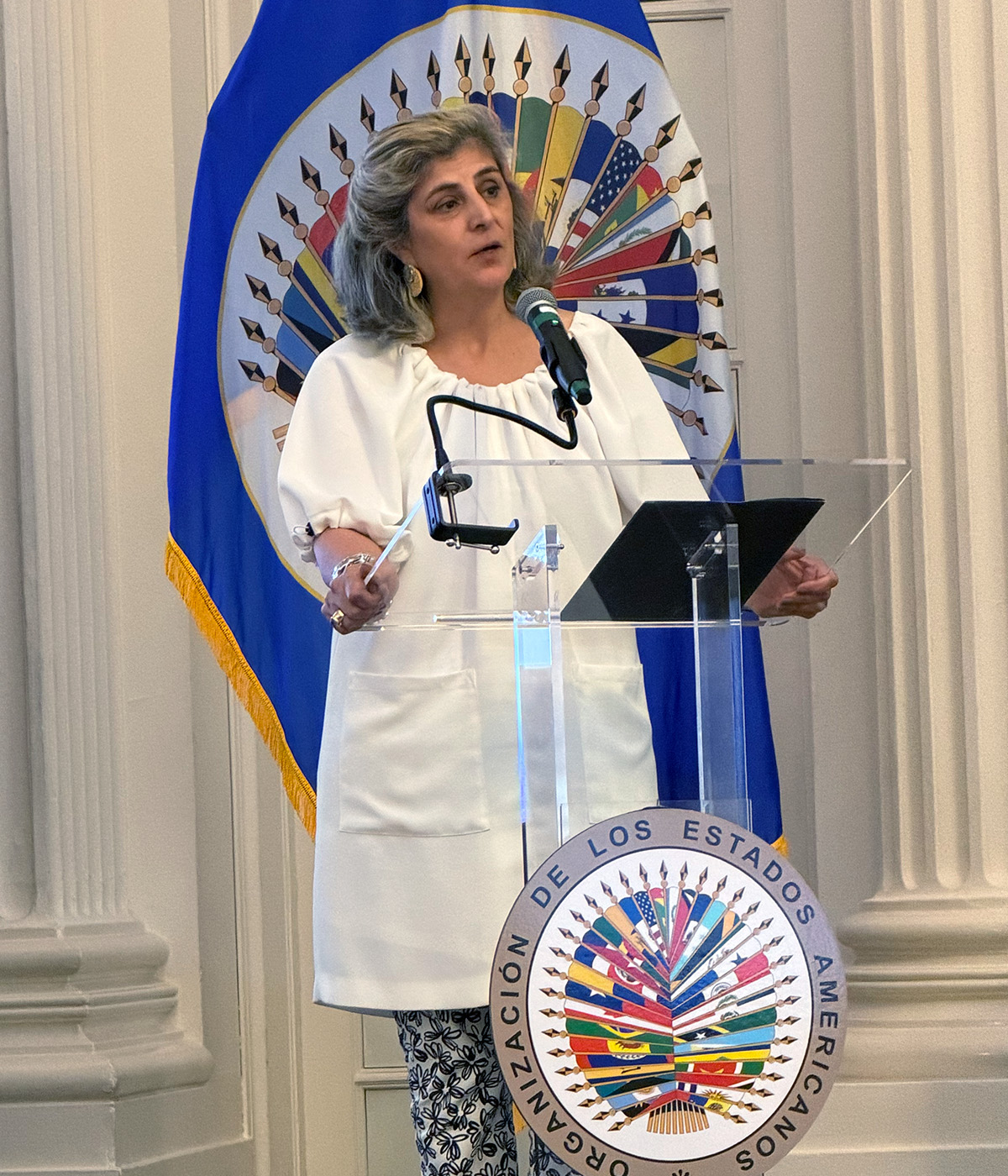
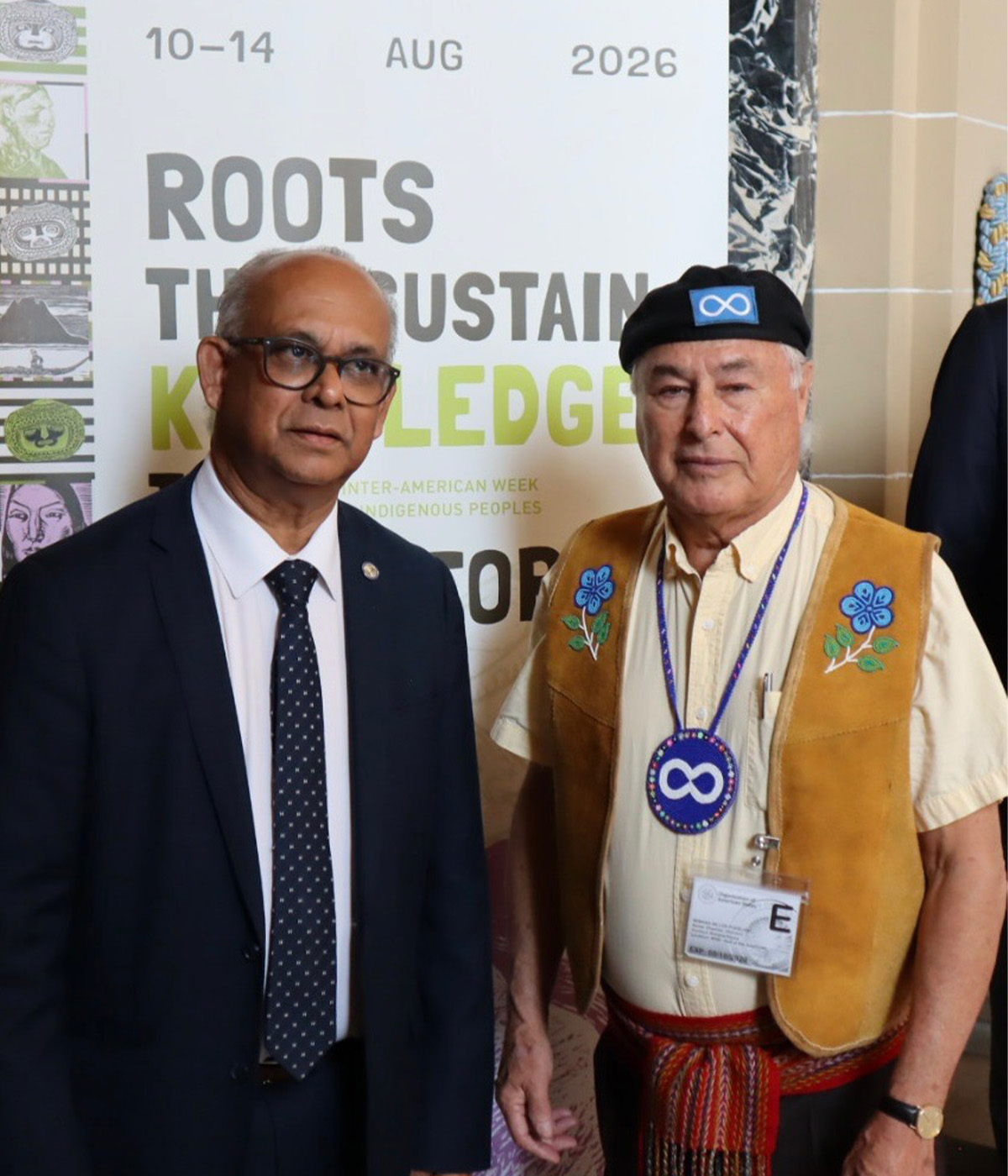
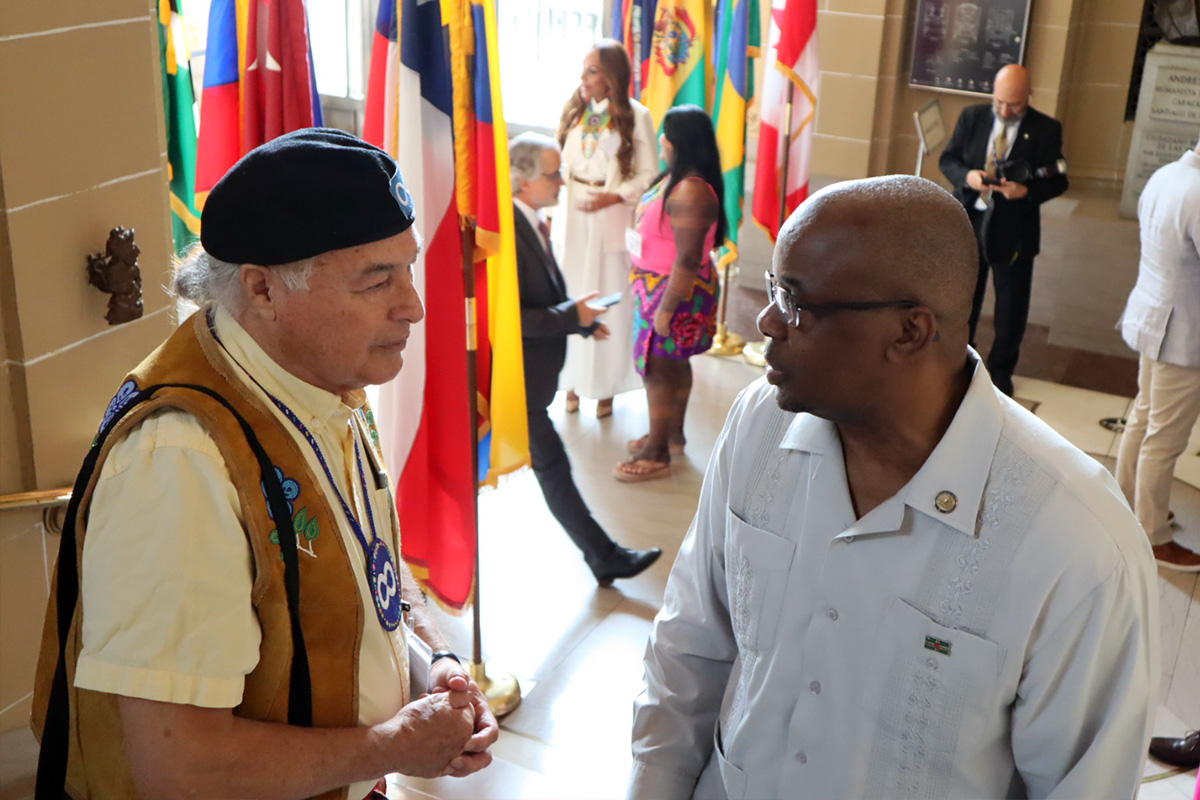
Ambassador Clément Chartier attended the IX Inter-American Week for Indigenous Peoples held August 10-14, 2026, in Washington DC, at the Organization of American States (OAS) building.
August 18, 2026
August 17, 2026
The theme for this year's session was: "Roots that sustain, knowledge that transforms - Rights, Water, Health, Culture and Innovation for a shared future".
The week's events included several panel sessions, a special meeting of the Permanent Council and cultural activities.
Ambassador Chartier participated on a panel in the Permanent Council meeting on Wednesday, August 12th, along with several other Indigenous representatives and spoke to the need for the OAS to look to the United Nations and its developments in its interaction with Indigenous peoples, using as examples the Permanent Forum on Indigenous Issues which sits in New York, NY for two weeks each spring and the Expert Mechanism on the Rights of Indigenous Peoples which sits for one week each summer in Geneva, Switzerland.
Ambassador Chartier stated that while waiting for such mechanisms to be established, the OAS could begin the enhanced participation of Indigenous peoples' representative institutions by allocating specific time for our interventions at Summits of the Americas, OAS General Assemblies and in the Permanent Council. That this be in our own right as Indigenous peoples and nations, outside of Civil Society and Social Actors. (See attached written intervention).
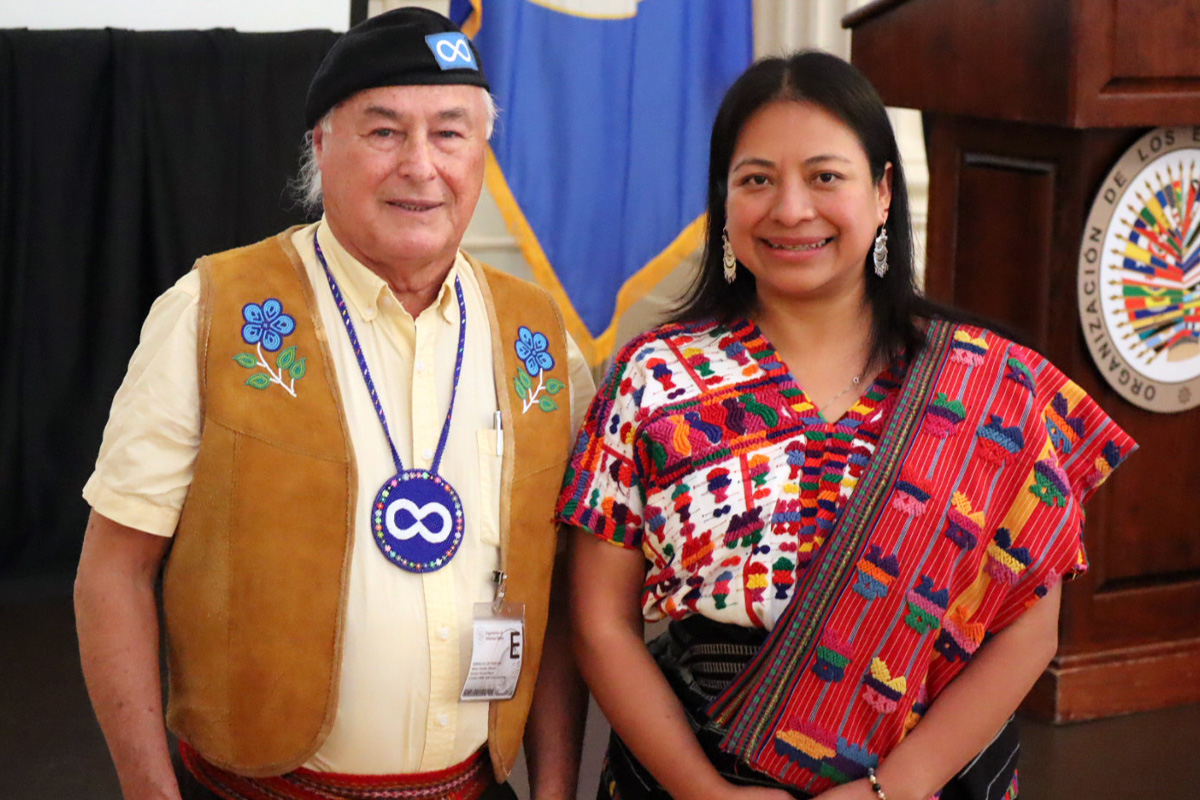
On Thursday, August 13th Ambassador Chartier spoke in another session entitled: "Conversation: Strengthening Participation and Dialogue Between Indigenous Peoples and the OAS", participating in Panel I - Implementation of the American Declaration on the Rights of Indigenous Peoples (ADRIP). Here Ambassador Chartier spoke about the history leading to the negotiating of the American Declaration (ADRIP) stemming from an OAS meeting he attended in January 1990 in Mexico City, Mexico to the adoption of the ADRIP in June 2016, the adoption of the Plan of Action for its implementation in June 2017, the establishment of the Inter-American Week for Indigenous Peoples in 2018 and the creation in 2023 of the ADRIP Working Group as the mechanism to monitor the implementation of ADRIP. (See the attached written intervention).
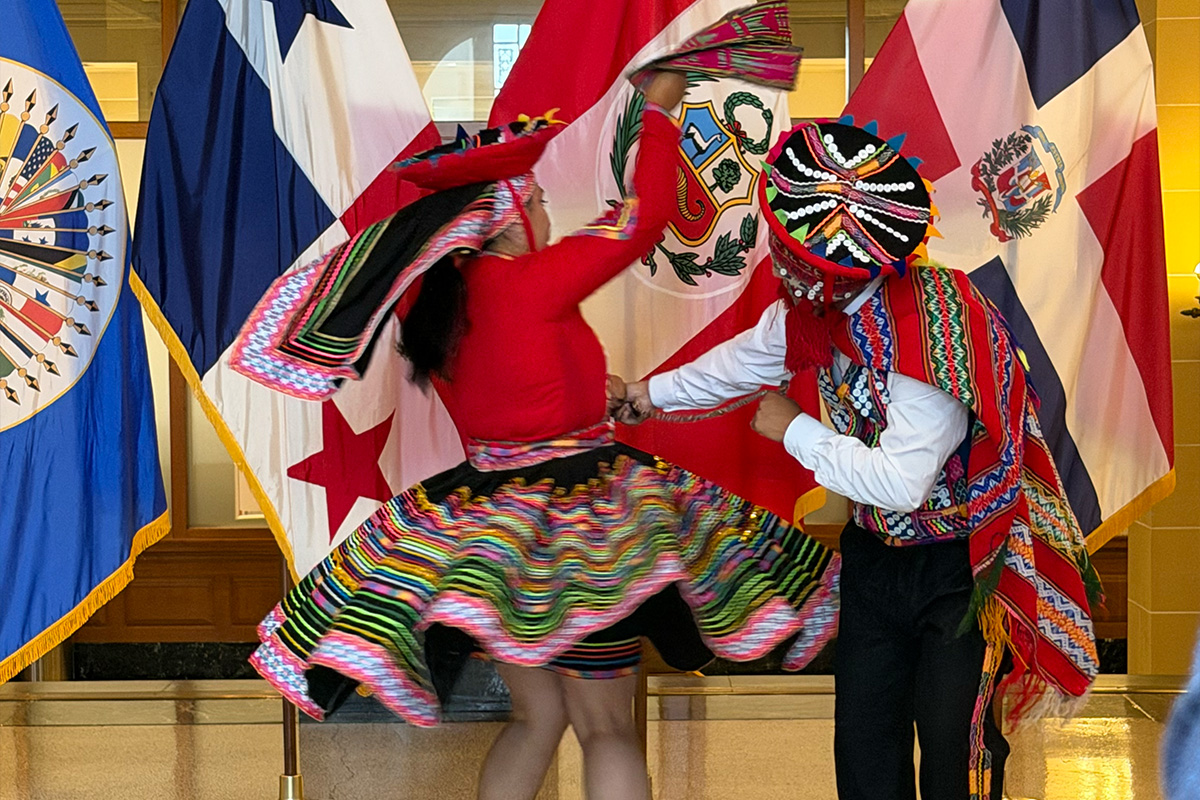
Interspersed among these many sessions, were several cultural events and opening of art exhibits, with an emphasis on the weavings by Indigenous women from Central America.
Under the leadership of OAS Assistant Secretary General Laura Gill, for the first time in its existence the week had a greater focus on dialogue between Indigenous peoples and Member States including addressing Indigenous rights, conflicts and rights defenders, which was both a positive, and welcome development. Former weeks concentrated more on cultural events, with less rights-based dialogue engaging Indigenous peoples.
From the positive reactions of Member States and Indigenous peoples, there is optimism that this success can be built on for future years.
Roots that Sustain, Knowledge that Transforms - Rights, Water, Health, Culture and Innovation for a shared future.
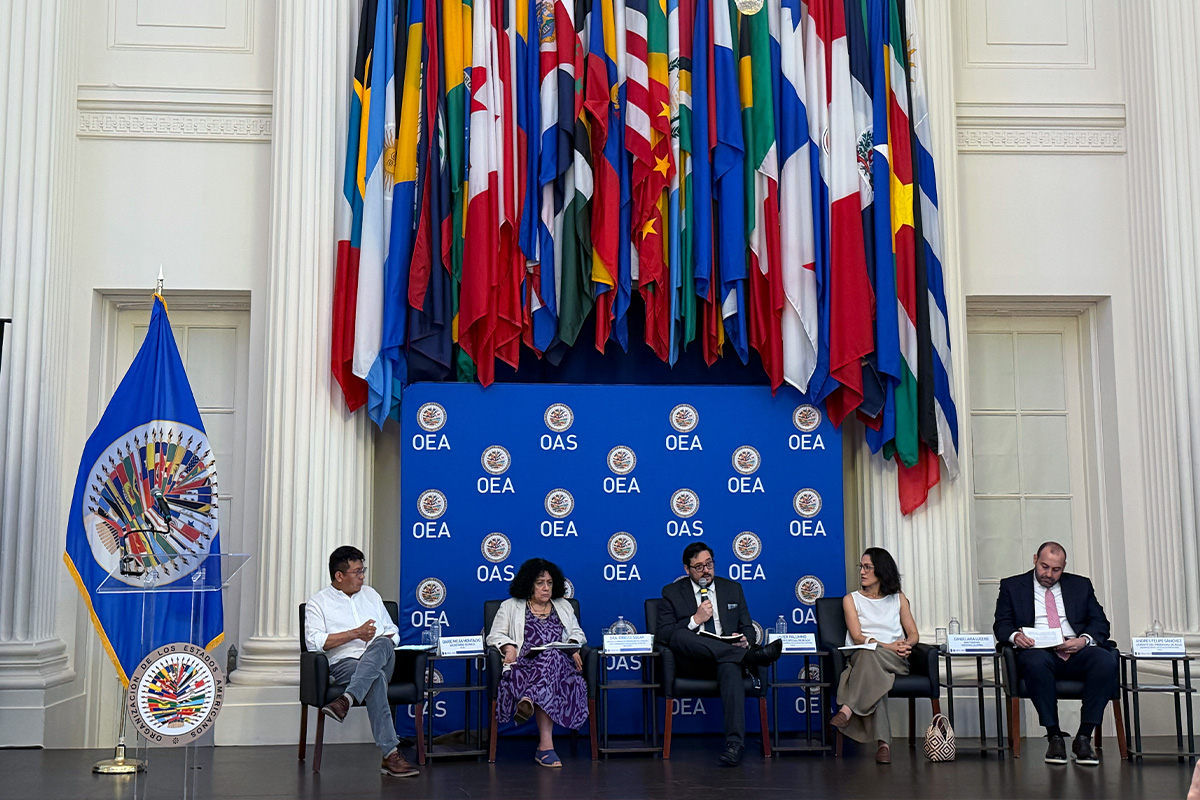 Inter-American Week for Indigenous Peoples, August 10-14, 2026
Indigenous peoples are of the land, with deep and enduring roots, sustained over millennia.
Indigenous peoples possess traditional knowledge, coupled with modern knowledge which assists and guides us in the transformation of our societies enabling us to co-exist with non-Indigenous peoples who have colonized the Americas.
This traditional knowledge has sustained our cultures, traditions, practices, languages, and well-being in connection to physical and mental health, foods, agricultural practices, hunting, fishing and gathering of natural resources required to sustain us.
Some Indigenous peoples rely more heavily on these natural resources than others, but all to differing degrees continue to rely on the natural world.
Water, as for all societies, has sustained life, particularly for Indigenous peoples in remote and rural areas. It is the basis of life, spirituality, food and cleansing.
In terms of knowledge that transforms, the rights of Indigenous peoples over the past 3 decades have been better understood, acknowledged and accepted by the colonizing peoples for who we are, and what our rights are, or ought to be.
Without this recognition and affirmation of rights, human life in the Hemisphere will not be complete. While there is still a long way to go, we have finally embarked on a path which could accomplish this lofty goal.
This in now grounded in the evolving international and regional (Americas) developments aimed at the recognition and affirmation of the existence of Indigenous peoples and our rights as reflected in the UN Declaration on the Rights of Indigenous Peoples (UNDRIP) and the American Declaration on the Rights of Indigenous Peoples (ADRIP).
With these positive developments, the rightful place of Indigenous peoples is slowly being accommodated and the space required for our growth as peoples and nations is opening up.
While more efforts have been made at the universal level through the United Nations, with the direct engagement of Indigenous peoples through such mechanisms as the Permanent Forum on Indigenous Issues (PFII) and the Expert Mechanism on the Rights of Indigenous Peoples (EMRIP), coupled with the efforts since the World Conference on Indigenous Peoples (WCIP) held by the UN General Assembly in 2014 and the resulting efforts to enhance the participation by Indigenous peoples in the UN General Assembly and the Human Rights Council, there is a corresponding need for these initiatives to be replicated by the OAS, with necessary adjustments.
The benefit for Indigenous peoples in the Americas is the opportunity to engage at a governmental level reflected in the Summit of the Americas composed of Heads of State, the General Assembly composed of Foreign Affairs Ministers and in the Permanent Council composed of Member State Ambassadors, as well as in subsidiary bodies, such as the Committee on Juridical and Political Affairs composed of senior officials of Member States.
Moving forward ADRIP and the 2017 Plan of Action provides the necessary framework for enhancing the participation of Indigenous peoples within the OAS by their legitimate representatives.
The Working Group established as the mechanism for the implementation of ADRIP is an existing OAS Indigenous-specific process and is a good start on dealing with Indigenous peoples and nations on a distinctions-basis, and through a collaborative approach.
This surely informs us that Indigenous peoples can be, and must be, engaged on a distinctions-based relationship, separate and apart from Civil Society and Social Actors.
This then cries out for a radical shift and restructuring of how the OAS interacts with Indigenous peoples and nations and their representative governing institutions, albeit within the sovereignty and territorial integrity of existing states, something contemplated by ADRIP.
Examples of how this can work is unfolding in Canada where National Indigenous representative organizations participate in First Minsters Conferences, Federal - Provincial - Territorial Ministers - Indigenous meetings and the Council of the Federation, as well as in Mexico and Guatemala where mechanisms for permanent dialogue between States and Indigenous peoples are in place as we heard on Monday afternoon.
This transformative change can now be accomplished at the Hemispheric level, with legitimate Indigenous governing institutions being accorded space in the Summits of the Americas, the General Assembly and the Permanent Council.
For illustrative purposes, Indigenous representatives could be provided specific time allocations in various meetings, for example 1 hour in the Summits of the Americas; 2 hours in the General Assembly; 3 hours in the Permanent Council; and as needed in the institutions such as the Committee on Juridical and Political Affairs.
While this may be seen as being too great a challenge, there should be best efforts made in that direction. Being difficult, does not mean impossible!
In October 2008, after discussing Indigenous engagement in the General Assembly with his Excellency, Jose Miguel Insulza at the GA in Medellin, we had a meeting at his office in Washington. There I explained the efforts that a number of us were undertaking to set up an Americas-wide organization which would represent the national Indigenous organizations throughout the Americas where ever they existed. That this proposed organization could be the interface with the OAS as it would be the most representative. His Excellency responded that this was a good idea, as the OAS needed to be assured that they were dealing with legitimate Indigenous representatives.
We have the experience to do so through Indigenous Leaders Summits of the Americas which were held in conjunction with Summits of the Americas, beginning in Canada in 2001, Argentina in 2005, Panama City in 2009, Cartegena in 2012, and Lima in 2018. A virtual Summit was held in June 2022, in which his Excellency Luis Almagro spent an hour with us.
In 2018, working with Assembly of First Nations and several Indigenous national organizations from Latin America we formed the American Council of Indigenous Peoples which has membership from throughout the Americas. Unfortunately, to date, we have been unable to secure funding, other than small amounts to have three virtual meetings, and attend several OAS meetings.
If the political will is there, certainly we should be able to accomplish the proposed objectives.
Finally, in reflection on the words of Tininiska Rivera and Commissioner Riyad Insanally, Rapporteur on the Rights of Indigenous Peoples spoken on Monday in connection with Indigenous rights defenders, before you is a Brooklyn Rivera Declaration adopted by a number of Indigenous organizations from throughout the Americas which calls upon the OAS for the adoption and implementation of robust and culturally appropriate protective measures for Indigenous human rights defenders.
We strongly encourage you to do so.
Marsi, Gracias, Merci, Thank you.
Clem Chartier, August 12, 2026
Implementation of the American Declaration on the Rights of Indigenous Peoples.
The American Declaration on the Rights of Indigenous Peoples (ADRIP), is a very significant and important instrument for Indigenous peoples which took a long time in the making.
I attended a meeting in January 1990 in Mexico City with Ambassador Patrick Robinson of the Inter-American Human Rights Commission and several other Indigenous representatives.
The purpose of the meeting was to discuss the 500th anniversary of the so-called discovery of the Americas in 1492, and how this should be marked in terms of Indigenous peoples. One of the ideas floated by Ambassador Robinson was a declaration setting out the existence and rights of the original inhabitants, the Indigenous peoples of the Americas.
While this was not feasible for adoption in 1992, nevertheless the seed was planted, and over the next 2 ½ decades a process was initiated which culminated in June 2016 with the adoption of ADRIP.
Having adopted the Declaration, the General Assembly adopted at its 2017 session a five-year Plan of Action for giving life to the Declaration.
Its Mission statement is instructive:
The promotion of public administrative, legislative, judicial and budgetary policies to ensure that indigenous peoples in the Americas enjoy and exercise all of their rights.
Its Vision statement provides:
Member states of the Organization of American States (OAS) develop and implement in consultation and cooperation with the Indigenous peoples policies, programs and projects for the recognition, promotion, and protection of the rights of indigenous peoples established in the American Declaration on the Rights of Indigenous Peoples (ADRIP).
As its Main Objective the Plan of Action sets out:
To contribute to the full recognition, exercise, and enjoyment of the rights of indigenous peoples at the national and hemispheric levels through the support of the OAS and other bodies of the inter-American system.
This Plan then is the blueprint for the implementation of the Declaration. In addition to this Plan of Action, which was renewed in 2021 for a further 5 years, the OAS in 2018 established the Inter-American Week for Indigenous Peoples, the 9th such week we are currently celebrating.
In connection to the implementation of ADRIP, there was a provision in the Plan for the creation of an institutional mechanism within the framework of the OAS for the purpose of monitoring the implementation of ADRIP.
At the initiative by the Government of Guatemala a meeting between the OAS and Indigenous representatives took place in March 2023, leading to the creation of a Working Group as the preferred mechanism to monitor the implementation of ADRIP. This Working Group is composed of two representatives from each of the 4 OAS regions, one government and one Indigenous. They all have alternates.
The Working Group had its inaugural meeting in Mexico City last year.
In this connection, it is important that Member States contribute to a fund which will enable the Working Group to carry out its mandate.
Part of the Plan of Action in terms of exchanges of best practices and experiences, was the holding of a special annual meeting of the Committee on Juridical and Political Affairs to be attended by officials of national and subnational institutions working on Indigenous issues, open to participation by representatives of Indigenous peoples where information would be shared on the progress, experience, lessons learned and challenges faced in the implementation of ADRIP.
It was also provided that the results, information and resolutions, from those special annual meetings would be integrated into the regional reports of the Permanent Council and brought to the attention of the General Assembly.
Such annual meetings have yet to be held.
The Plan of Action does provide a minimal framework for Indigenous peoples' engagement within the OAS, but more needs to be done in terms of engaging Indigenous representatives in our own right as the original inhabitants of the Americas, and not as part of Civil Society or Social Actors, the topic for the next Panel.
Clem Chartier, August 13, 2026

Contact Us
300-150 Henry Avenue
Winnipeg, Manitoba, Canada, R3B 0J7
x 204-586-8474 A info [at] mmf [dot] mb [dot] ca
