
- Home
- |
- Our Culture
- Louis Riel
- Métis Firsts in North America
- Métis Minute
- Who are we?
- Métis Nation Database
- Kids' Corner
- I Love to Bead Month
- |
- Departments / Affiliates
- Citizenship
- Culture & Heritage
- Early Learning & Child Care
- Economic Development
- Education
- Energy, Infrastructure & Resource Management
- Engagement and Consultation
- Health & Wellness
- Housing and Property Management
- Identity Protection, Inter-Indigenous Relations & International Affairs
- Infinity Women Secretariat
- Louis Riel Capital Corporation
- Louis Riel College
- Louis Riel Institute
- MEDOCare Pharmacy
- Métis Child and Family Services Authority
- Métis Employment & Training
- Métis Justice Institute
- Métis Rights & Constitution
- Michif Language
- Red River Métis Business Development Corporation
- Red River Métis Community Resource
- Red River Métis Fur Company
- Red River Métis National Heritage Centre
- Red River Métis Veterans
- Riel House
- Sixties Scoop
- Youth
- |
- Government
- |
- Jobs
- |
- News
- |
- Contact
Red River Métis lawyer advocates for Indigenous justice
August 7, 2026
Citizen Amanda Carling helped launch Canadian Registry for Wrongful Convictions
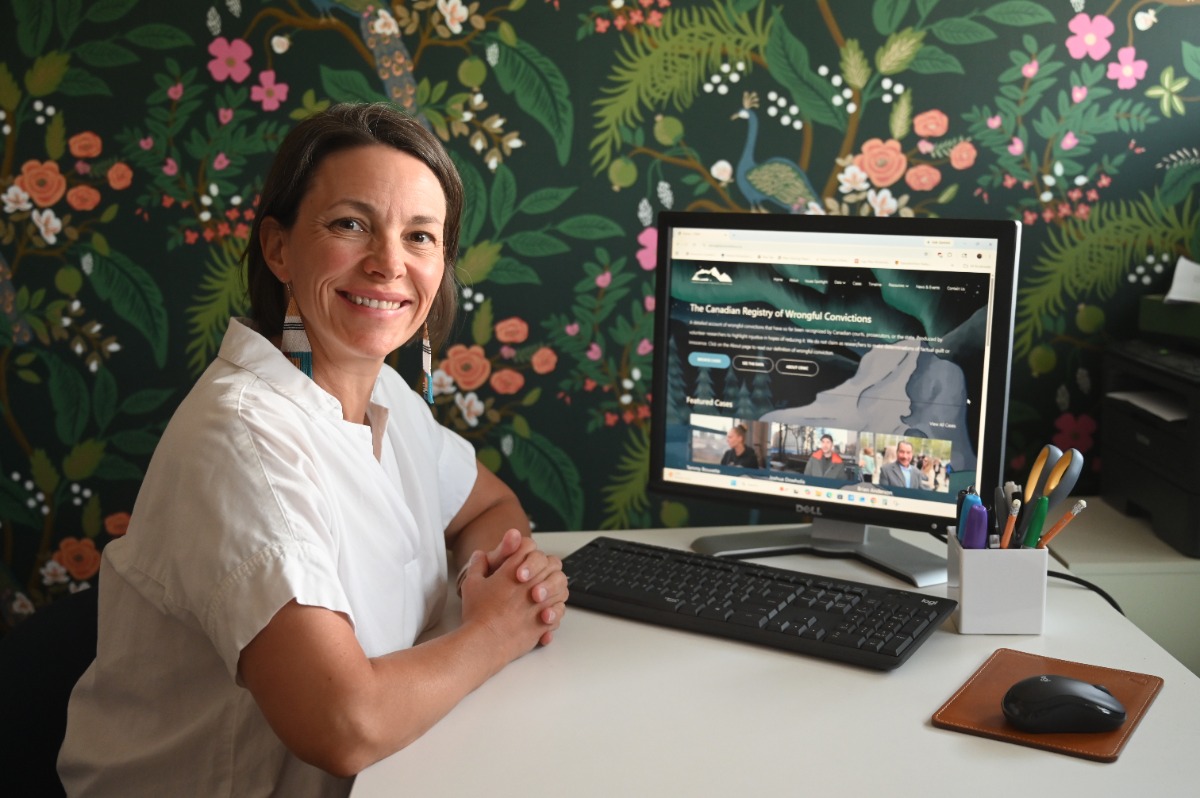 Amanda Carling has served on the Canada Committee of the Human Rights Watch since 2016.
It was during law school when Red River Métis lawyer Amanda Carling had an "aha" moment that shaped her commitment to addressing the injustices Indigenous peoples face in Canada.
"My life goal is truly to use the law to help and to not hurt vulnerable people," said Carling. "When I was in law school, I had this moment of going, 'oh my god, the genocide against Indigenous people could not have happened without lawyers. Lawyers wrote the legislation that allowed Métis people to have their land stolen.'"
Little did she know that this spark would take her across Canada with work to address the overrepresentation of Indigenous people in the justice system, and prevent and rectify wrongful convictions. Now living in British Columbia, the province she was born in, Carling was raised in Winnipeg. Her early experiences of her Red River Métis identity have strongly influenced her career trajectory.
"I have a very strong memory as a kid of being at a neighbour's house and talking about being Métis with the mother of this family, and my brother ran home to tattle on me to tell our parents that I had presumably done something wrong in sharing this family secret," she said. "That was the first time where I kind of realized that maybe this is something that some people, and my brother as a young child, felt kind of shame about."
Through the Beyond Borders program, Carling recently received her Manitoba Métis Federation (MMF) Citizenship card.
"I've been hugely supported by the MMF, which I'm so grateful for," she said, adding that when she received the physical card in the mail, "I cried because it was just so important to me... to have this Citizenship."
The lawyer, educator, and advocate brought her connection to her Red River Métis heritage into her law practice, starting from her education.
"The process of connecting to my Métis heritage has really been connected to understanding Métis legal traditions and the way that my education has allowed me to serve the Indigenous community and what I've been able to do with my law degree since," she said.
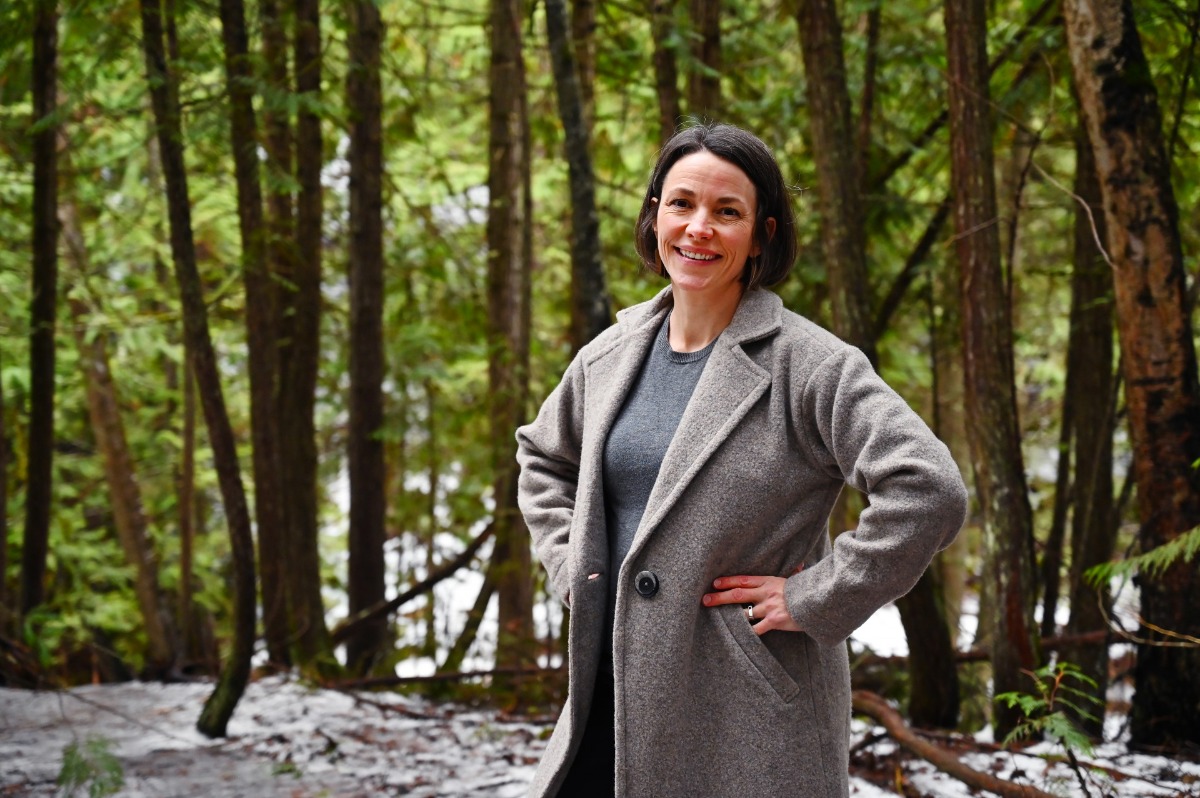 In 2020, Carling was awarded the Precedent Setter Award for "revolutionizing legal education."
It was during Carling's criminology undergrad at the University of Manitoba, when she enrolled in a practicum course with Judge Judith Elliott and observed youth court, that her understanding of Indigenous overrepresentation in the legal system changed.
"I remember watching child after child, all of whom were visibly Indigenous, most of whom didn't have a parent there to support. Sometimes there was a CFS worker, some of them were seemingly just on their own. It was that moment of not just understanding the statistics of overrepresentation from a book, which I had been studying for two years plus already, but actually seeing this is what court looks like," she said. "It was that moment, not of my head deciding, but really of my heart deciding that this is what I wanted to do with my life."
After attending law school at the University of Toronto, Carling sat at a crossroads for articling, a work placement that can determine the future of a lawyer's career.
"I had two options... one of them was to work with a provincial government in Ontario, [or] I could work with a non-profit organization," she said. "All of the advice I got was go with the government, go with stability, go with the pension. And all of that was very good advice... but I went with my heart, and I started working for Innocence Canada."
While working on significant cases at Innocence Canada (a legal non-profit that helps overturn wrongful convictions), Carling began to notice a lack of attention to wrongful convictions of Indigenous people in the justice system.
"Almost no one was talking about Indigenous people in the context of miscarriages of justice and wrongful convictions, and to me it was so obvious," said the Red River Métis lawyer. "Perhaps the racism that has resulted in this overrepresentation situation is also causing miscarriages of justice."
At Innocence Canada, Carling began developing her knowledge on the issue of miscarriages of justice and wrongful convictions, and worked on an outreach and education initiative.
"Through that work, over two years, I travelled all across northern Ontario, a little bit into Manitoba, in the territories, and in British Columbia," she said. "[I] was able to do public legal education with First Nations, Métis, and Inuit communities on wrongful convictions."
What really struck the Red River Métis lawyer - and solidified her dedication to working in the criminal justice system - was sitting in community with people directly impacted by the justice system.
"Everything I suspected about the overrepresentation of Indigenous people - the prejudice, policing, and tunnel vision on the part of the Crown - all of these causes of wrongful convictions impact Indigenous people disproportionately," she said.
My life goal is truly to use the law to help and to not hurt vulnerable people. - Amanda Carling
After spending a few years working with Innocence Canada, Carling took a job at the University of Toronto and supported the law school's reform efforts around the Truth and Reconciliation Commission's calls to action. It was there that she continued her work on wrongful convictions with her former law professor.
"I got to co-teach the course on wrongful convictions with Professor Kent Roach... through that process, [we] developed the Canadian Registry of Wrongful Convictions, which is the first comprehensive database of data around wrongful convictions in Canada," she said. "Our students and a few journalists as well were foundational in getting that project off the ground."
It was this collective, groundbreaking effort that has made tangible changes for Indigenous people affected by wrongful conviction.
"There's been a real shift in the innocence movement in Canada by virtue of some of this advocacy that myself and Kent Roach and others have done," Carling said. "More Indigenous people have received remedies for wrongful convictions. More Indigenous people's cases are being worked on. And very importantly, the federal government has passed legislation at the end of 2024 to support the building of a commission, a commission that will review applications for wrongful convictions."
Carling will continue to work on and expand the Canadian Registry for Wrongful Convictions, bringing needed advocacy for Indigenous people who have the justice system too often working against them. Learn more about Amanda Carling, her legal career, and her advocacy work at: amandacarling.ca.
Like Carling, the MMF recognizes that justice must reflect Indigenous traditions, values, and perspectives. Through the Métis Justice Institute, the MMF provides justice services, programs, support, and advocacy that respond to the needs of the Red River Métis community. To learn more, visit mmf.mb.ca/metis-justice-institute.
Une avocate Métisse de la Rivière Rouge milite pour la justice autochtone
Sous-titre : Notre concitoyenne Amanda Carling a participé à la création du Canadian Registry for Wrongful Convictions
Amanda Carling est membre du chapitre canadien de l'organisme Human Rights Watch depuis 2016.
C'est pendant ses études en droit qu'Amanda Carling, avocate Métisse de la Rivière Rouge, a eu une révélation qui a déterminé son engagement à lutter contre les injustices auxquelles sont confrontés les peuples autochtones au Canada.
« Mon but dans la vie est vraiment d'utiliser le droit pour aider les personnes vulnérables, et non pour leur nuire », affirme-t-elle. « Quand j'étais à la faculté de droit, il y a eu ce moment où je me suis dit : "Oh mon Dieu, le génocide contre les peuples autochtones n'aurait pas pu avoir lieu sans les avocats. Ce sont les avocats qui ont rédigé les lois qui ont permis que les Métis se fassent voler leurs terres." »
Elle ne se doutait pas encore que cette prise de conscience allait l'amener à sillonner le Canada pour lutter contre la surreprésentation des Autochtones dans le système judiciaire, de même que pour prévenir et rectifier les condamnations injustifiées. Maintenant établie en Colombie-Britannique, sa province natale, elle a grandi à Winnipeg. Le fait d'avoir été en contact très jeune avec son identité de Métisse de la Rivière Rouge a fortement influencé son parcours professionnel.
« Je garde un souvenir très vif de mon enfance », se remémore-t-elle : « un jour, j'étais chez des voisins et je parlais de mon identité Métisse avec la mère de cette famille; mon frère est alors rentré en courant à la maison pour me dénoncer auprès de nos parents, leur disant que j'avais sans doute fait quelque chose de mal en révélant ce secret de famille. C'est alors que j'ai pris conscience pour la première fois que c'était une chose dont certaines personnes, y compris mon petit frère, pouvaient se sentir quelque peu honteuses. »
Grâce au programme Au-delà des frontières, Mme Carling a reçu récemment sa carte de citoyenne de la Fédération Métisse du Manitoba (FMM).
« J'ai reçu un énorme soutien de la part de la FMM, et j'en suis extrêmement reconnaissante », souligne-t-elle, ajoutant que lorsqu'elle a reçu la carte par la poste, « j'ai pleuré parce que c'était tellement important pour moi... d'avoir cette citoyenneté. »
L'avocate, éducatrice et militante a intégré son attachement à son héritage Métis de la Rivière Rouge dans sa pratique du droit, et ce, dès ses études.
« Le processus qui m'a permis de renouer avec mon héritage Métis est étroitement lié à la compréhension des traditions juridiques Métisses, à la façon dont ma formation m'a permis de servir les communautés autochtones et à ce que j'ai pu accomplir depuis grâce à mon diplôme en droit », dit-elle.
En 2020, Amanda Carling a reçu le prix Precedent Setter Award (en anglais seulement) pour avoir « révolutionné l'enseignement du droit ».
C'est au cours de ses études de premier cycle en criminologie à l'Université du Manitoba, alors qu'elle suivait un stage auprès de la juge Judith Elliott et observait les audiences du tribunal pour adolescents, que sa perception de la surreprésentation des Autochtones dans le système judiciaire a évolué.
« Je me souviens d'avoir vu défiler un enfant après l'autre, tous visiblement autochtones, dont la plupart n'avaient pas de parent présent pour les soutenir », relate-t-elle. « Il y avait parfois une travailleuse ou un travailleur des services à l'enfance et à la famille sur place, mais d'autres semblaient tout simplement livrés à eux-mêmes. C'est alors que j'ai compris le phénomène, non pas seulement en lisant les statistiques sur la surreprésentation dans un livre - que j'étudiais déjà depuis plus de deux ans - mais en voyant concrètement à quoi ressemble un tribunal. C'est à ce moment précis que j'ai laissé parler mon cœur et que j'ai décidé que c'était ce que je voulais faire de ma vie. »
Après avoir étudié en droit à l'Université de Toronto, elle s'est retrouvée à la croisée des chemins au moment de choisir son stage, une expérience professionnelle qui peut déterminer l'avenir de la carrière d'une avocate ou d'un avocat.
« Deux option s'offraient à moi », explique-t-elle : « je pouvais travailler pour un gouvernement provincial en Ontario, ou encore pour un organisme sans but lucratif. Tout le monde me conseillait de choisir le gouvernement, pour la stabilité, pour la pension de retraite. Et c'était de très bons conseils... mais j'ai choisi d'écouter mon cœur, et j'ai commencé à travailler pour Innocence Canada. »
En travaillant sur des dossiers importants chez Innocence Canada (un organisme juridique sans but lucratif qui aide à faire annuler les condamnations injustifiées), elle s'est avisée du manque d'attention accordée aux condamnations injustifiées des Autochtones au sein du système judiciaire.
« Presque personne ne parlait des Autochtones dans le contexte des erreurs judiciaires et des condamnations injustifiées, et pour moi, c'était tellement évident », s'indigne l'avocate Métisse de la Rivière Rouge. « Peut-être que le racisme qui a conduit à cette situation de surreprésentation est également à l'origine d'erreurs judiciaires. »
Chez Innocence Canada, elle a commencé à approfondir ses connaissances sur la question des erreurs judiciaires et des condamnations injustifiées, et a œuvré à une initiative de sensibilisation et d'éducation.
« Dans le cadre de ce travail, pendant deux ans, j'ai parcouru tout le nord de l'Ontario, une partie du Manitoba, les territoires et la Colombie-Britannique », rapporte-t-elle. « J'ai pu mener des activités d'éducation juridique auprès des communautés des Premières Nations, des Métis et des Inuits sur le thème des condamnations injustifiées. »
Ce qui l'a vraiment marquée - et qui a renforcé son engagement à travailler au sein du système de justice pénale - c'est d'avoir côtoyé les personnes directement touchées par le système judiciaire.
« Tout ce que je soupçonnais au sujet de la surreprésentation des Autochtones - les préjugés, les pratiques policières et la vision étroite de la Couronne - toutes ces causes de condamnations injustifiées touchent les Autochtones de manière disproportionnée », fait-elle remarquer.
Mon but dans la vie est vraiment d'utiliser le droit pour aider les personnes vulnérables, et non pour leur nuire. - Amanda Carling
Après avoir travaillé quelques années chez Innocence Canada, Mme Carling a accepté un poste à l'Université de Toronto, où elle a appuyé les efforts de réforme de la faculté de droit en réponse aux appels à l'action de la Commission de vérité et réconciliation. C'est là qu'elle a poursuivi son travail sur les condamnations injustifiées aux côtés de son ancien professeur de droit.
« J'ai eu l'occasion d'enseigner le cours sur les condamnations injustifiées conjointement avec le professeur Kent Roach », expose-t-elle... « Au cours de ce processus, nous avons mis sur pied le Canadian Registry of Wrongful Convictions (« registre canadien des condamnations injustifiées »), qui constitue la première base de données exhaustive sur les condamnations injustifiées au Canada. Nos étudiantes et nos étudiants, de même que quelques journalistes, ont joué un rôle essentiel dans le lancement de ce projet. »
C'est cet effort collectif et novateur qui a permis d'apporter des changements concrets pour les Autochtones touchés par des condamnations injustifiées.
« Il y a eu un véritable tournant dans le mouvement pour l'innocence au Canada grâce à certains des efforts de défense des droits que Kent Roach, moi-même et d'autres avons menés », précise Mme Carling. « Un plus grand nombre d'Autochtones ont obtenu réparation pour des condamnations injustifiées. Davantage de dossiers concernant des Autochtones sont en cours de traitement. Et, fait d'une grande importance, le gouvernement fédéral a adopté, à la fin de 2024, une loi visant à soutenir la création d'une commission chargée d'examiner les demandes relatives aux condamnations injustifiées. »
Mme Carling continuera à développer et à élargir le Canadian Registry for Wrongful Convictions (en anglais seulement), menant un travail de défense indispensable en faveur des Autochtones qui sont trop souvent défavorisés par le système judiciaire. Pour en apprendre plus long sur Amanda Carling, sa carrière juridique et ses activités de défense des droits, voyez la page amandacarling.ca (en anglais seulement).
Tout comme Amanda Carling, la FMM reconnaît que la justice doit refléter les traditions, les valeurs et les perspectives autochtones. Par l'intermédiaire de l'Institut pour la justice des Métis, la FMM offre des services judiciaires, des programmes, du soutien et des activités de défense des droits qui répondent aux besoins de la communauté des Métis de la Rivière Rouge. Pour plus de détails, consultez la page mmf.mb.ca/metis-justice-institute (en anglais seulement).

Contact Us
300-150 Henry Avenue
Winnipeg, Manitoba, Canada, R3B 0J7
x 204-586-8474 A info@mmf.mb.ca
