
- Home
- |
- Our Culture
- Louis Riel
- Métis Firsts in North America
- Métis Minute
- Who are we?
- Métis Nation Database
- Kids' Corner
- I Love to Bead Month
- |
- Departments / Affiliates
- Citizenship
- Culture & Heritage
- Early Learning & Child Care
- Economic Development
- Education
- Energy, Infrastructure & Resource Management
- Engagement and Consultation
- Health & Wellness
- Housing and Property Management
- Identity Protection, Inter-Indigenous Relations & International Affairs
- Infinity Women Secretariat
- Louis Riel Capital Corporation
- Louis Riel College
- Louis Riel Institute
- MEDOCare Pharmacy
- Métis Child and Family Services Authority
- Métis Employment & Training
- Métis Justice Institute
- Métis Rights & Constitution
- Michif Language
- Red River Métis Business Development Corporation
- Red River Métis Community Resource
- Red River Métis Fur Company
- Red River Métis National Heritage Centre
- Red River Métis Veterans
- Riel House
- Sixties Scoop
- Youth
- |
- Government
- |
- Jobs
- |
- News
- |
- Contact
6 things to harvest in the forests of the Homeland
September 18, 2026
Fall goods Red River Métis Citizens can harvest to celebrate National Forest Week
Head outdoors this September to harvest these six things in the Red River Métis Homeland.
Feel the dirt beneath your boots and take a deep breath of purified air from the trees, because it's National Forest Week 2026.
National Forest Week is celebrated across Canada to appreciate and bring awareness to our forests and the vital part they play in Red River Métis environment, culture, and livelihood. The Red River Métis have always nurtured a harmonious and economic relationship with the forests of the Homeland: boreal and aspen.
Historical sources of Red River Métis economy such as the fur and pemmican trades are intertwined with the resources our forests have to offer. Our Homeland forests continue to boost Red River Métis traditional economies but also bring Citizens back to their heritage and together with their community.
Whenever Red River Métis Citizens go to harvest, it's vital to adhere to the current Métis Laws of the Harvest. Rooted in traditional Red River Métis values of conservation, sustainability, and respect for the land, the Métis Laws of the Harvest offer guidance for responsible harvesting.
Make sure you have a valid Harvester card with up-to-date CTF stickers before harvesting. To get your updated CTF stickers or to learn more about harvesting, visit mmf.mb.ca/harvesters.
This National Forest Week, the Manitoba Métis Federation (MMF) is encouraging Red River Métis Citizens to explore forests themselves and look for these six fall harvest items.
Don't harvest anything that you can't confidently identify; if you need help learning to harvest in the forests of the Homeland watch for harvesting events in your area at mmf.mb.ca/events.
Here are six things to harvest this fall to celebrate National Forest Week
-
Chokecherries
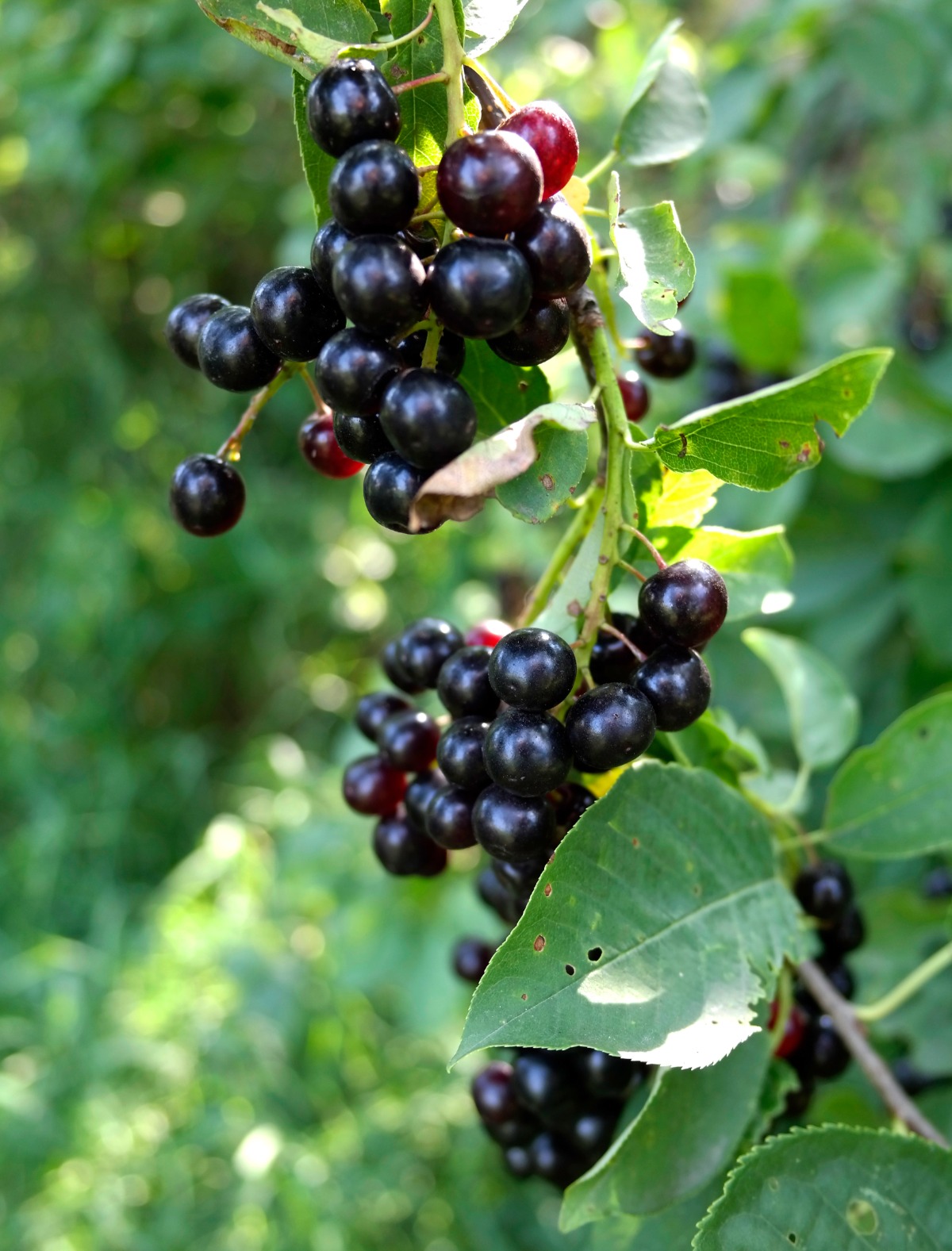 Chokecherries were one of three berries historically used to make pemmican alongside Saskatoon berries and highbush cranberries.
September is the perfect time to pick chokecherries. Despite their name and bitter reputation, chokecherries can be cooked down with sugar into a delicious jam, jelly, or syrup with an almond-like flavour. This black cherry bush can grow to be the size of a shrub or small tree and comes from the rose family. Don't be confused by the attractive bright red of the unripe cherries; the cherries are ripe and ready for harvesting when they are a dark red to a near-black purple. You can find this tart treat in both the boreal and aspen forests of Manitoba, usually along the outer edges of the forest line.
The cherry family carries cyanide in its seeds; you can dry them in the sun to nullify the toxicity. To err on the side of safety, you can also strain the seeds from a syrup or jam during processing.
Chokecherries have a lookalike called the honeysuckle. You can distinguish the two by looking at their berries. Honeysuckle berries are called "twin berries" for the distinct way the berries grow directly into each other, always in twos along a stem, whereas the chokecherries grow multiple berries along a stem, creating bunches.
-
Lobster mushroom
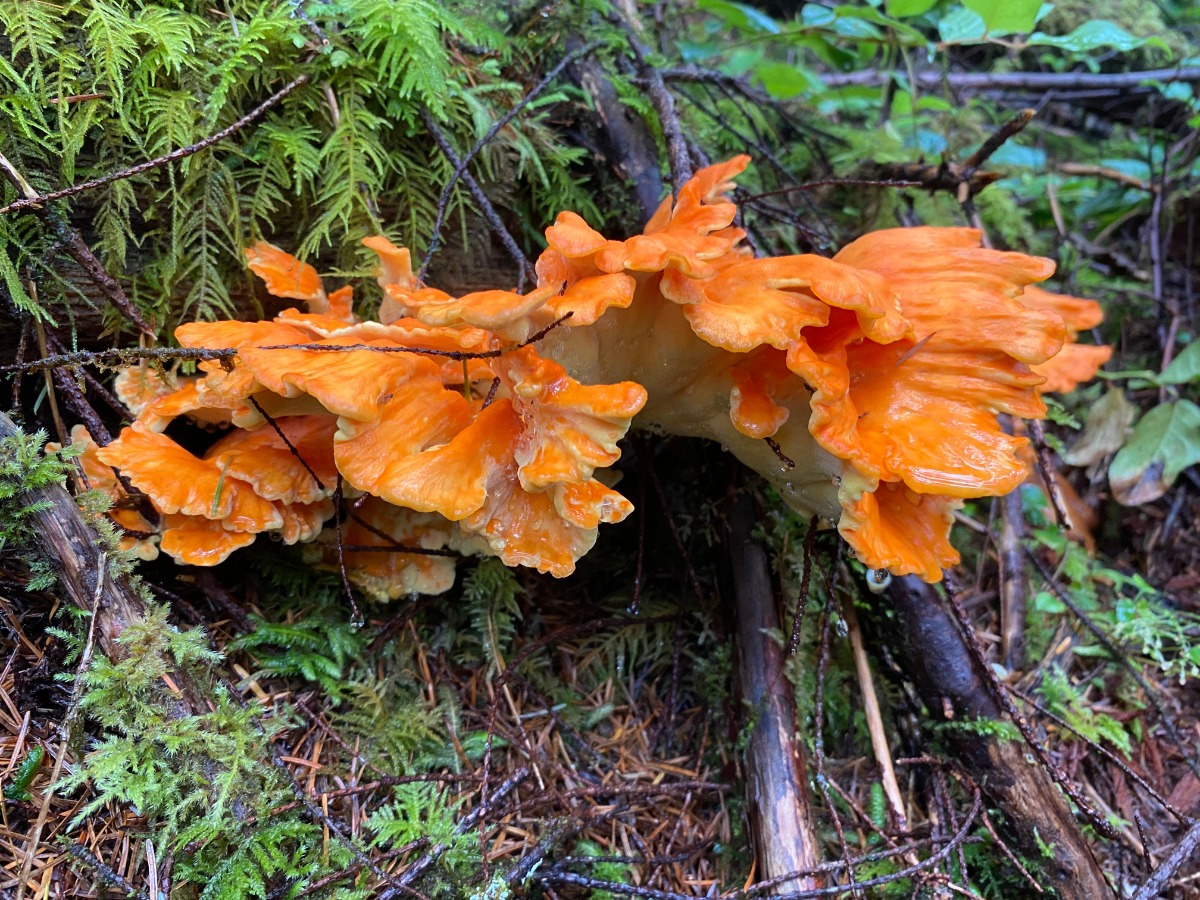 Add lobster mushrooms to your fall harvest for a prairie-grown mushroom with a seafood-like flavour!
This delicious forest harvest gets its name, and unique culinary reputation, for their stunning bright colours resembling cooked lobster and having a flavour reminiscent of seafood. These mushrooms are highly sought after by mushroom harvesting enthusiasts.
You can find lobster mushrooms in late summer to early fall. They grow in both the boreal and aspen forests, but can be more commonly found in the latter. Lobster mushrooms have an interesting nature; they are a parasitic fungus, attacking and taking over gilled mushrooms and growing off their body until the previous mushroom no longer exists.
For lobster mushrooms, the younger the mushroom, the lighter the colour. Ideally, you want to harvest these fancy looking mushrooms when they're younger and have a white to orange colour rather than the older red or purple (Mushroom Marauder).
-
Rose hips
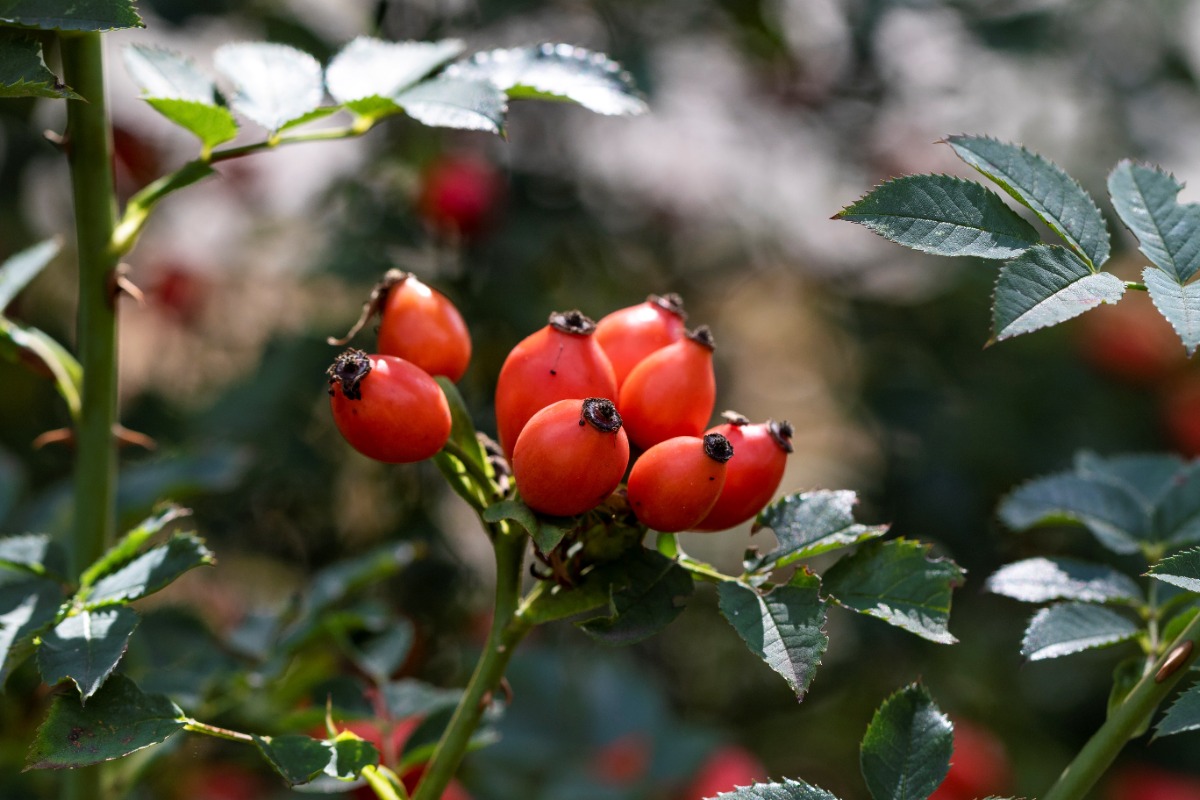 Waiting for the first frost to harvest rose hips helps soften and sweeten them.
There's nothing better to enjoy on a crisp fall morning than rose hip tea. There are multiple kinds of roses that grow naturally in the Homeland: the prickly wild rose and the prairie rose. Roses are shrub plants that flower and then grow rose hips - the fruit of the plant (although the rose petals are also edible). Apart from their sweet floral taste, they are high in antioxidants and vitamin C. In addition to being turned into a tea, they can also be refined into skincare products.
Rose hips are red and orange when ripe. They are berry-like fruits that appear after blooms drop from the plant. Rose hips contain seeds you'd remove before consuming (Grow Forage Cook Ferment). The best rose hips are harvested after the first frost of the year.
Wild roses have no toxic lookalikes, making them a great option to start for those new to harvesting (Grow Forage Cook Ferment).
-
Chicken of the woods
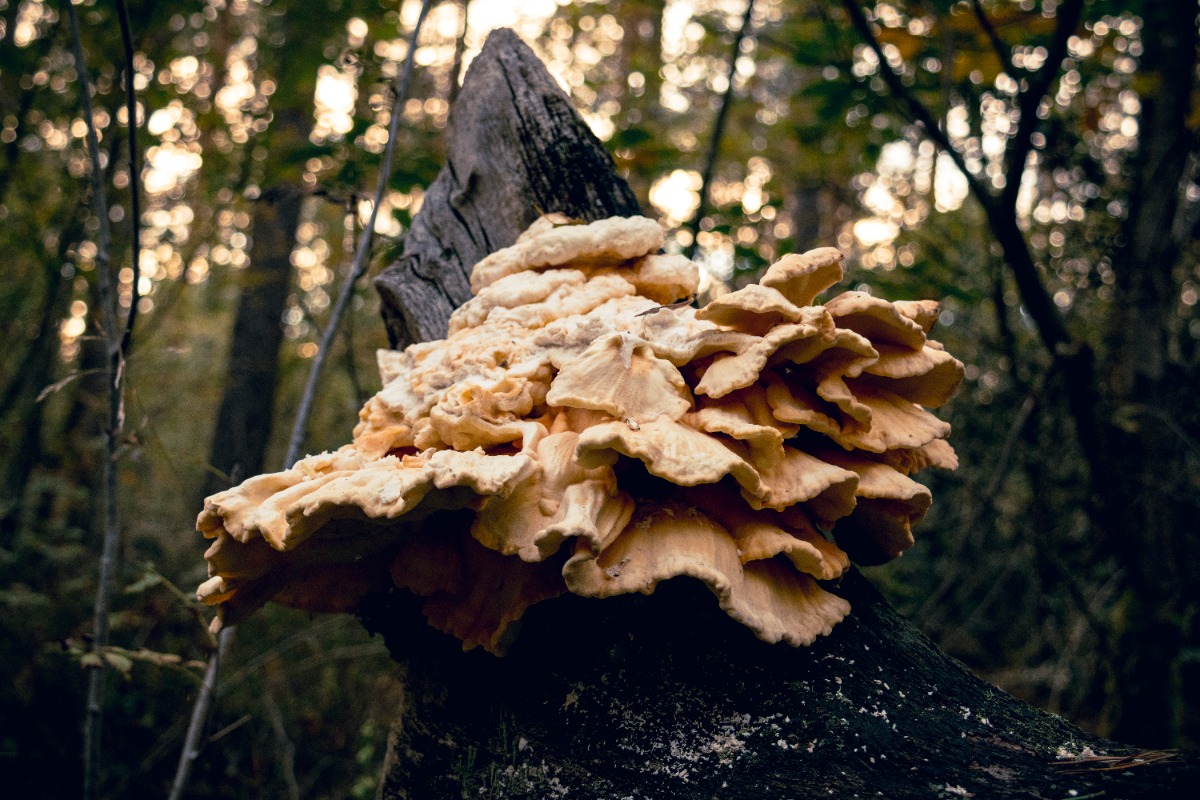 Chicken of the woods makes for a great meat alternative in your favourite recipes.
Vegans, vegetarians, and foodies alike will love this fall harvest: chicken of the woods. Commonly used as a meat substitute, these large yellow and orange mushrooms grow on the side of hardwood trees - you'll never find them growing out of the ground (Mossy Oak). They prove to be a great harvest for beginner mushroom hunters due to their distinct characteristics.
You can harvest this mushroom all season long - from late spring to fall (Mossy Oak). You'll want to harvest them when they're younger as they get brown and woody with age, losing their delicious flavour. And, you guessed it, it has a chicken-like flavour.
-
Labrador tea
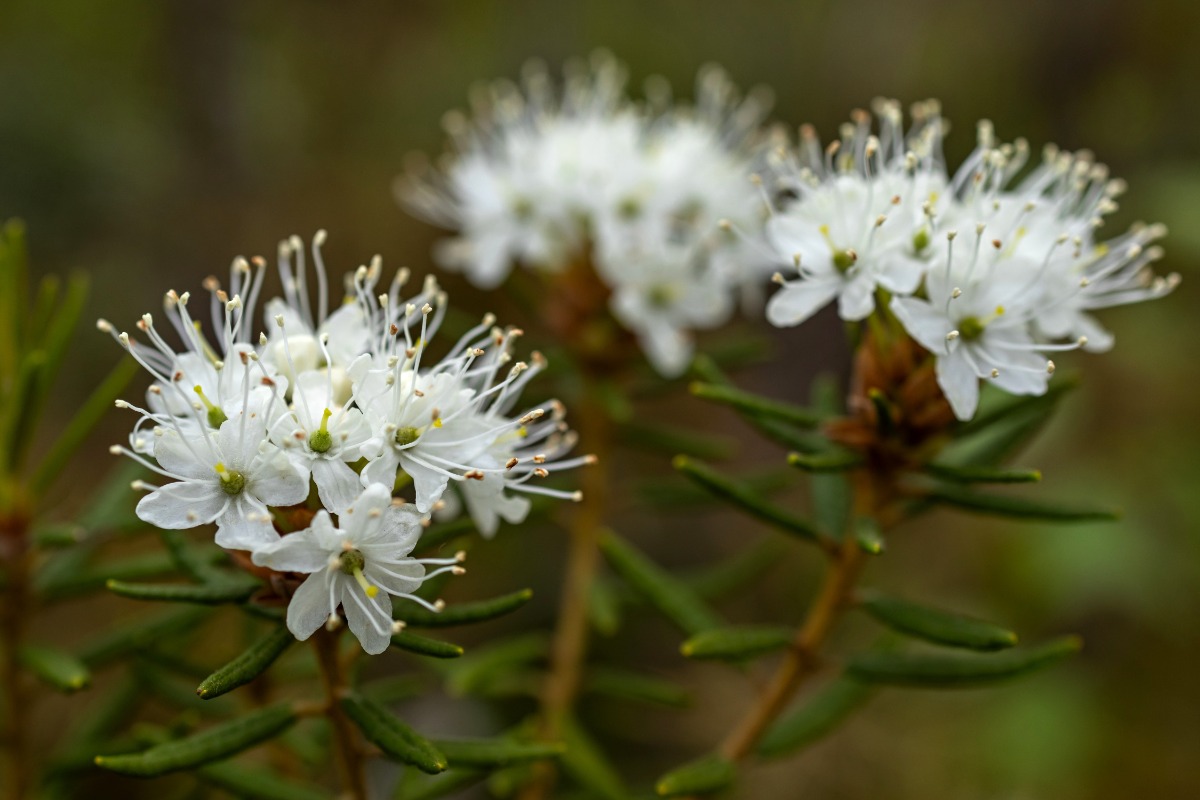 Due to the ledol levels in the leaves, Labrador tea is a one-cup-a-day kind of tea.
'Tis the season for warm beverages to cozy up with, so number five on our list is the Labrador tea plant, which is commonly used for, as the name suggests, tea.
Also known as Hudson's Bay tea, bog tea, and swamp tea, this small evergreen shrub is commonly found in wetland areas of the boreal forest, but you'll likely see it anywhere you hike. This ground-level shrub has dark green leaves, rolled edges, and a fuzzy underside. The plant produces distinctive white flower clusters (Parks Canada), but you'll want to wait until after the flowers are gone to harvest. The Labrador tea plant can be harvested from summer well into the fall.
If you like a warm piney herbal tea, you may want to try this shrub out. When making your Labrador tea, you'll want to add a small number of leaves for steeping - only one to five leaves for a single thermos - or you might get a stomach ache. The potential digestive discomfort is due to the ledol and other tannins found in the plant, meaning you'll want to be cautious when consuming Labrador tea.
-
Highbush cranberry
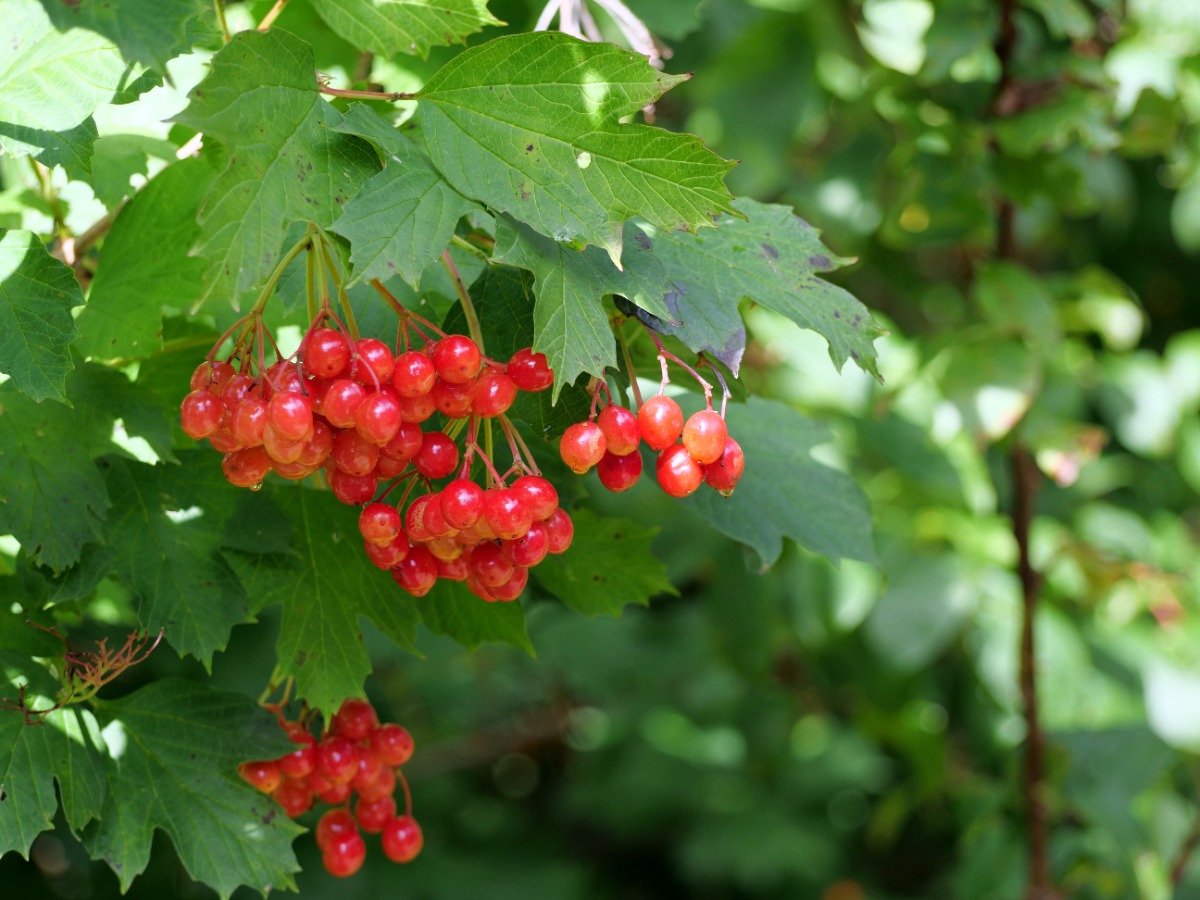 These showstopping berries make a great addition to any holiday feast.
Highbush cranberry jelly is a delicious preserve to make for the holiday season. Technically part of the honeysuckle family rather than a true cranberry, these delicious berries can be harvested in September and October.
A large multi-stemmed plant that grows in forest clearings and moist environments, highbush cranberries can sometimes be found along bodies of water. You can identify the shrub by their maple-like leaves that turn vibrant red with hints of deep purple during the fall - and, of course, the showstopping berry.
You'll want to harvest highbush cranberry after the first frost when the berries turn from their unripe yellow and green colour to a beautiful bright red. Don't be discouraged by the unpleasant "gym sock" odour of the ripe berry; once processed, the smell will dissipate and only the tasty cranberry flavour will remain.
Forests are more than just a place to explore. From the foods they provide to the traditions they sustain, they are an essential part of Red River Métis culture, history, and way of life. For National Forest Week, we encourage Citizens to explore the forests of the Red River Métis Homeland firsthand - and maybe pick up a treat on the way.
Don't go on the journey alone - join the Energy, Infrastructure and Resource Management (EIRM) team on one of their many field days across the Homeland. Visit EIRM's Natural Resources page at: mmf.mb.ca/natural-resources to learn more, and keep an eye on our events page for field day events in your area: mmf.mb.ca/events.
Works Cited
Grow Forage Cook Ferment. "Foraging Rose Hips & Wild Rose: Identification, Harvesting, & Uses,"www.growforagecookferment.com/foraging-for-rose-hips
Mossy Oak. "Chicken Of The Woods Mushrooms - Identifying and Cooking," www.mossyoak.com/our-obsession/blogs/recipes/chicken-of-the-woods-mushrooms-identifying-and-cooking
Mushroom Marauders. "Lobster Mushrooms - An In-Depth Overview," Lobster Mushrooms - An In-Depth Overview
Parks Canada. "Labrador tea," Labrador tea - Wapusk National Park
Six aliments à récolter dans les forêts de notre terre natale
Les citoyens Métis de la Rivière Rouge peuvent récolter ces produits d'automne pour célébrer la Semaine nationale de l'arbre et des forêts
Partez en nature pendant le mois de septembre pour cueillir ces six aliments sur la terre natale des Métis de la Rivière Rouge.
Sentez la terre sous vos bottes et respirez à pleins poumons l'air purifié par les arbres, car c'est la Semaine nationale de l'arbre et des forêts 2026.
La Semaine nationale de l'arbre et des forêts est célébrée partout au Canada dans le but de valoriser et de faire connaître nos forêts, et de rappeler le rôle essentiel qu'elles jouent dans l'environnement, la culture et les moyens de subsistance des Métis de la Rivière Rouge. Les Métis de la Rivière Rouge ont toujours entretenu une relation harmonieuse et économique avec les forêts de leur terre natale : les forêts boréales et les forêts de peupliers faux-trembles.
Les sources historiques de l'économie des Métis de la Rivière Rouge, telles que le commerce des fourrures et du pemmican, sont étroitement liées aux ressources que nos forêts ont à offrir. Les forêts de notre terre natale continuent de stimuler les économies traditionnelles des Métis de la Rivière Rouge, tout en permettant aux citoyens de renouer avec leur patrimoine et de se rapprocher de leur communauté.
Les citoyens Métis de la Rivière Rouge qui récoltent doivent impérativement respecter les lois métisses de la récolte (en anglais seulement) en vigueur. Ancrées dans les valeurs traditionnelles des Métis de la Rivière Rouge que sont la conservation, la durabilité et le respect de la terre, les lois métisses de la récolte fournissent des lignes directrices pour une récolte responsable.
Assurez-vous de disposer d'une carte de récolteur valide, munie d'autocollants du CTF à jour, avant de commencer la récolte. Pour obtenir vos autocollants du CTF à jour ou pour en savoir plus sur la récolte, rendez-vous sur mmf.mb.ca/harvesters.
À l'occasion de cette Semaine nationale de l'arbre et des forêts, la Fédération Métisse du Manitoba (FMM) encourage les citoyens Métis de la Rivière Rouge à explorer eux-mêmes les forêts et à rechercher ces six produits de récolte automnale.
Ne cueillez rien que vous ne pouvez identifier avec certitude; si vous avez besoin d'aide pour apprendre à cueillir dans les forêts de la terre natale, consultez le calendrier des événements de récolte organisés dans votre région sur mmf.mb.ca/events.
Voici six produits à récolter cet automne pour célébrer la Semaine nationale de l'arbre et des forêts
- Cerise de Virginie
Les cerises de Virginie font partie des trois baies traditionnellement utilisées pour fabriquer le pemmican, les deux autres étant les amélanches et les pimbinas.
Septembre est le moment idéal pour cueillir des cerises de Virginie. S'ils ont la réputation d'être amers, ces petits fruits, lorsqu'ils sont cuits dans le sucre, se transforment en une délicieuse confiture, une gelée ou un sirop au goût rappelant celui de l'amande. Cet arbuste à cerises noires peut atteindre la taille d'un buisson ou d'un petit arbre et appartient à la famille des rosacées. Ne vous laissez pas tromper par le rouge vif attrayant des cerises non mûres; les fruits sont mûrs et prêts à être cueillis lorsque leur couleur vire au rouge foncé ou au violet presque noir. Vous pouvez trouver ce délice acidulé aussi bien dans les forêts boréales que dans les forêts de peupliers faux-trembles du Manitoba, généralement à la lisière de la forêt.
Les graines des cerises contiennent du cyanure; vous pouvez les faire sécher au soleil pour neutraliser leur toxicité. Par mesure de sécurité, vous pouvez également filtrer les graines d'un sirop ou d'une confiture lors de la préparation.
Le cerisier de Virginie ressemble à une autre plante appelée chèvrefeuille. Vous pouvez distinguer les deux en observant leurs baies. Les baies de chèvrefeuille sont appelées « baies jumelles » en raison de la façon particulière dont elles poussent directement l'une contre l'autre, toujours par deux le long d'une tige, tandis que le cerisier de Virginie produit plusieurs baies le long d'une tige, formant ainsi des grappes.
- Champignon homard (lactaire parasité)
Ajoutez des champignons homards (lactaires parasités) à votre récolte d'automne pour profiter d'un champignon qui pousse dans les prairies, mais dont le goût rappelle les fruits de mer!
Ce délicieux trésor de la forêt tire son nom, ainsi que sa réputation culinaire unique, de ses superbes couleurs vives qui rappellent celles d'un homard cuit et de sa saveur évoquant les fruits de mer. Cette espèce est très recherchée par les amateurs de cueillette de champignons.
On trouve les champignons homards de la fin de l'été au début de l'automne. Ils poussent aussi bien dans les forêts boréales que dans les forêts de peupliers faux-trembles, mais on les trouve plus couramment dans ces dernières. Les champignons homards ont une nature intéressante : ce sont des champignons parasites qui s'attaquent aux champignons à lamelles, s'en emparent et se développent à partir de leur corps jusqu'à ce que le champignon d'origine disparaisse.
Plus les champignons homard sont jeunes, plus leur couleur est pâle. Idéalement, il faut cueillir ces champignons à l'allure raffinée lorsqu'ils sont jeunes et présentent une couleur allant du blanc à l'orange, plutôt que lorsqu'ils sont plus âgés et prennent une teinte rouge ou violette (source : Mushroom Marauder).
- Cynorrhodon
Mieux vaut attendre le premier gel pour cueillir les cynorrhodons puisqu'ils seront plus tendres et plus sucrés.
Il n'y a rien de mieux à savourer lors d'une fraîche matinée d'automne qu'un thé au cynorrhodon. Plusieurs variétés de roses poussent à l'état sauvage sur notre terre natale : la rose aciculaire et la rose sétigère. Les roses sont des arbustes qui fleurissent puis produisent des cynorrhodons, le fruit de la plante (bien que les pétales de rose soient également comestibles). En plus d'avoir un goût floral sucré, ils sont riches en antioxydants et en vitamine C. Lorsqu'ils ne sont transformés en tisane, ils servent parfois à la fabrication de produits de soin pour la peau.
Les cynorrhodons sont rouges et orange lorsqu'ils sont mûrs. Ces fruits, qui ressemblent à des baies, apparaissent après la chute des fleurs. Les cynorrhodons contiennent des pépins qu'il faut retirer avant de consommer le fruit (source : Grow Forage Cook Ferment). Les meilleurs cynorrhodons sont récoltés après le premier gel de l'année.
Les roses aciculaires n'ont pas de sosies toxiques, ce qui en fait un excellent choix pour les personnes qui s'initient à la récolte (source : Grow Forage Cook Ferment).
- Polypore soufré
Le polypore soufré (qu'on appelle aussi « poulet des bois ») constitue un excellent choix pour remplacer la viande dans vos recettes préférées.
Végétaliens, végétariens et gourmets apprécieront tout autant cette récolte automnale : le polypore soufré (qu'on appelle aussi « poulet des bois »). Couramment utilisés comme substitut à la viande, ces gros champignons jaunes et orangés poussent sur l'écorce des feuillus - vous ne les trouverez jamais poussant directement dans le sol (source : Mossy Oak). Leurs caractéristiques distinctives en font un choix idéal pour les personnes qui s'initient à la cueillette de champignons.
Vous pouvez cueillir ce champignon tout au long de la saison, de la fin du printemps à l'automne (source : Mossy Oak). Il est préférable de le cueillir lorsqu'il est jeune, car avec l'âge, il brunit et devient ligneux, et perd sa délicieuse saveur. Et, vous l'avez deviné, son goût rappelle celui du poulet.
- Thé du Labrador
En raison de la teneur en lédol des feuilles de thé du Labrador, vous ne devez pas en consommer plus d'une tasse par jour.
C'est le temps de l'année idéal pour se réchauffer en dégustant des boissons chaudes. C'est pourquoi le numéro cinq de notre liste est le thé du Labrador, couramment utilisé, comme son nom l'indique, pour faire du thé.
Également connu sous le nom de « thé velouté », ce petit arbuste à feuillage persistant pousse couramment dans les zones humides de la forêt boréale, mais vous le verrez probablement partout où vous ferez de la randonnée. Cet arbuste couvre-sol présente des feuilles vert foncé, aux bordures arrondies et au dessous velu. La plante produit des grappes de fleurs blanches distinctives (source : Parcs Canada), mais il vaut mieux attendre que les fleurs soient fanées avant de cueillir les feuilles. Le thé du Labrador peut être cueilli de l'été jusqu'à la fin de l'automne.
Si vous aimez les tisanes chaudes aux notes de pin, vous devriez essayer cet arbuste. Lorsque vous préparez votre thé du Labrador, n'ajoutez qu'une petite quantité de feuilles pour l'infusion - seulement une à cinq feuilles pour un thermos - sinon vous risquez d'avoir mal au ventre. Ces potentiels troubles digestifs sont dus au lédol et aux autres tanins présents dans la plante; faites donc preuve de prudence lors de la consommation de thé du Labrador.
- Pimbina
Ces baies spectaculaires agrémenteront à merveille n'importe quel festin des Fêtes.
La gelée de pimbinas est une délicieuse confiture à préparer pour les Fêtes. Issus de la famille des chèvrefeuilles, les pimbinas peuvent être récoltés en septembre et en octobre.
Le pimbina pousse dans une grande plante à tiges multiples, la viorne, que l'on retrouve dans les clairières forestières et les milieux humides, et parfois près des cours d'eau. Vous pouvez identifier cet arbuste à ses feuilles similaires à celles de l'érable, qui prennent une teinte rouge vif avec des reflets violacés à l'automne - et, bien sûr, à ses baies spectaculaires.
Il est conseillé de récolter les pimbinas après le premier gel, lorsque les baies passent de leur couleur jaune et verte (signe qu'elles ne sont pas mûres) à un magnifique rouge vif. Ne vous laissez pas décourager par l'odeur désagréable de « vieilles chaussettes » qui se dégage de la baie mûre; une fois le fruit transformé, cette odeur se dissipera et seule la savoureuse saveur du pimbina restera.
Les forêts sont bien plus qu'un simple lieu d'exploration. Des aliments qu'elles fournissent jusqu'aux traditions qu'elles perpétuent, elles constituent un élément essentiel de la culture, de l'histoire et du mode de vie des Métis de la Rivière Rouge. À l'occasion de la Semaine nationale de l'arbre et des forêts, nous encourageons les citoyens à explorer par eux-mêmes les forêts de la terre natale des Métis de la Rivière Rouge - et peut-être à y ramasser une petite gourmandise en chemin.
Ne partez pas seul à l'aventure : joignez-vous à l'équipe du ministère Énergie, infrastructures et gestion des ressources lors de l'une de ses nombreuses journées en plein air organisées partout sur la terre natale. Consultez la page sur les ressources naturelles du Ministère à l'adresse mmf.mb.ca/natural-resources pour en savoir plus, et visitez régulièrement notre page sur les événements pour connaître les journées en plein air organisées dans votre région : mmf.mb.ca/events.
Références
Forage Cook Ferment. « Foraging Rose Hips & Wild Rose: Identification, Harvesting, & Uses », www.growforagecookferment.com/foraging-for-rose-hips
Mossy Oak. « Chicken Of The Woods Mushrooms - Identifying and Cooking », www.mossyoak.com/our-obsession/blogs/recipes/chicken-of-the-woods-mushrooms-identifying-and-cooking
Mushroom Marauders. « Lobster Mushrooms - An In-Depth Overview », Lobster Mushrooms - An In-Depth Overview
Parcs Canada. « Thé du Labrador », Thé du Labrador - Parc national Wapusk

Contact Us
300-150 Henry Avenue
Winnipeg, Manitoba, Canada, R3B 0J7
x 204-586-8474 A info@mmf.mb.ca
